

Spain
Granada
A city where the Alhambra and Albayzín still face one another, while Nasrid, Christian and everyday Granada continue on the same slopes.
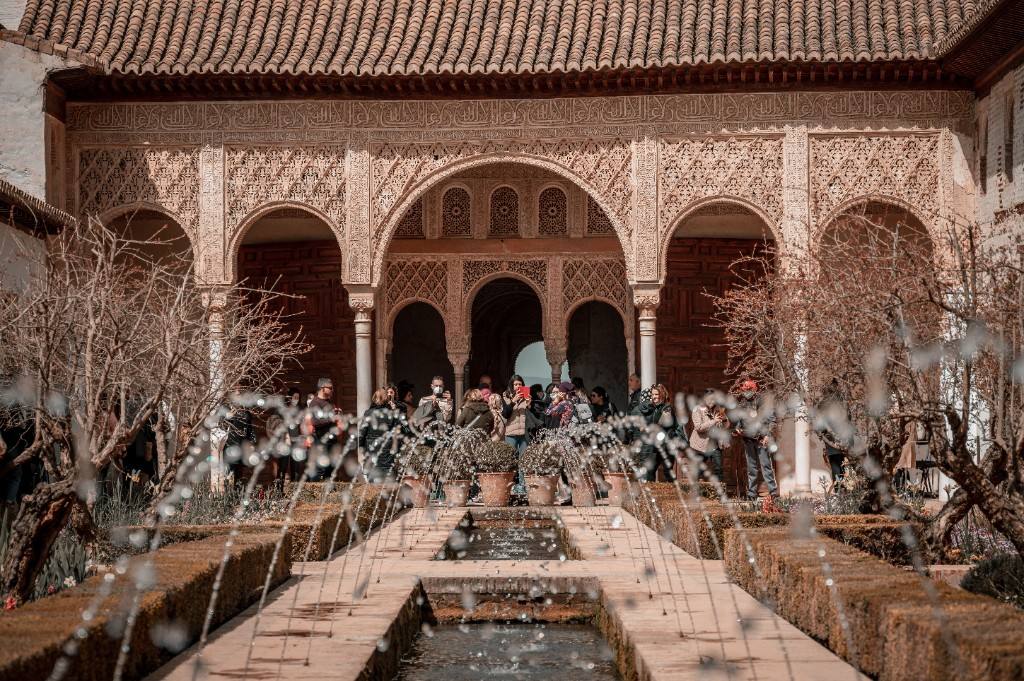
Granada is often reduced to the Alhambra, but the palace only becomes fully legible when the rest of the city is allowed back into the picture. Across the valley, Albayzín preserves an older street pattern; below, the Darro marks the space between them; elsewhere, Christian monuments and later additions show what happened after 1492. The city is most interesting when these layers remain in conversation.
Two hills that explain each other
One of Granada’s most useful views is not from inside a monument but across the valley. From Albayzín, the Alhambra appears as a long fortified complex rather than a sequence of famous rooms. From the Alhambra, the older neighbourhood reads as a dense residential hill. Mirador de San Nicolás makes this relationship especially clear. The two sides help explain the difference between courtly power and urban life — and why Granada cannot be understood through the palace alone.
The Alhambra was a city of its own
The Nasrid dynasty ruled Granada from 1238 until 1492, and the Alhambra developed as much more than one palace. Defensive structures, royal residences, service areas, gardens and water systems formed a larger palatine environment. Generalife belonged to the same landscape of retreat, cultivation and controlled water. Reading the complex this way shifts attention from isolated decoration to systems: how water moved, how courtyards organised privacy and how architecture framed views of the city and mountains.
1492 did not freeze the city
The conquest by the Catholic Monarchs in 1492 changed Granada’s political and religious order, but it did not turn the Nasrid city into a sealed relic. Christian institutions were inserted into the urban fabric, the Royal Chapel became closely associated with the new monarchy, and Charles V later placed a Renaissance palace inside the Alhambra complex itself. These interventions can feel abrupt because they are. Granada’s value lies partly in that visible tension between continuity and deliberate change.
The older city survives at street scale
Albayzín preserves much of the medieval street logic associated with the older Islamic city: narrow routes, sudden turns, steep climbs and small openings. The Darro below creates a natural line between the neighbourhood and the Alhambra hill. Walking here changes the scale after the palace. Instead of monumental halls, the city is read through thresholds, walls, slopes and views that appear for only a few seconds.
A historic city that is still lived in
Granada is also a university city with strong everyday traditions. Its tapas culture keeps social life close to bars and small streets, while Sacromonte is closely associated with zambra and flamenco traditions. These elements should not be treated as decorative extensions of the Alhambra. They belong to later communities and different histories, reminding us that Granada continued to produce culture long after its best-known dynasty disappeared.
A small perspective
A reading, not a historical claim.
Granada rewards comparison. Look at the Alhambra from Albayzín before judging it from inside; compare palace water with the dry defensive walls; then notice how Christian additions sit beside Nasrid spaces rather than outside them.
Stories from Granada
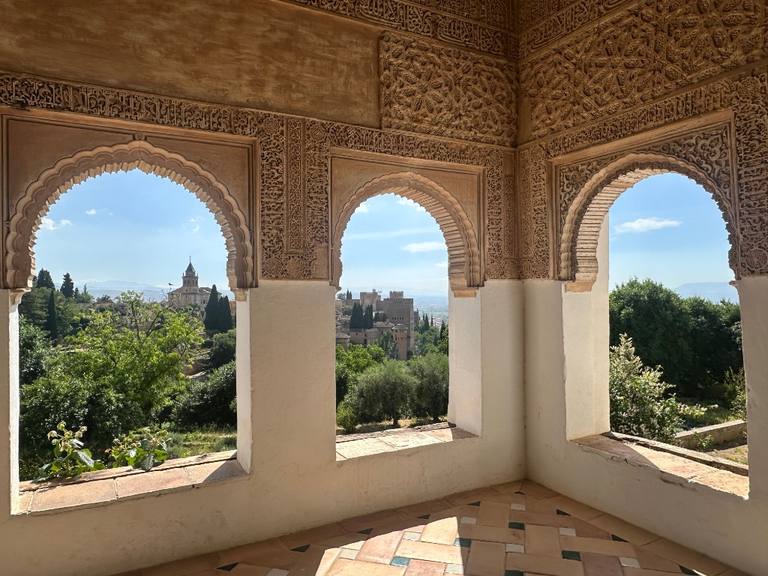
Why is Islamic heritage still so visible in southern Spain?
Córdoba, Seville and Granada preserve different layers of Al-Andalus. The legacy is visible not because one style survived unchanged, but because later cities kept building with, over and around what came before.
Read →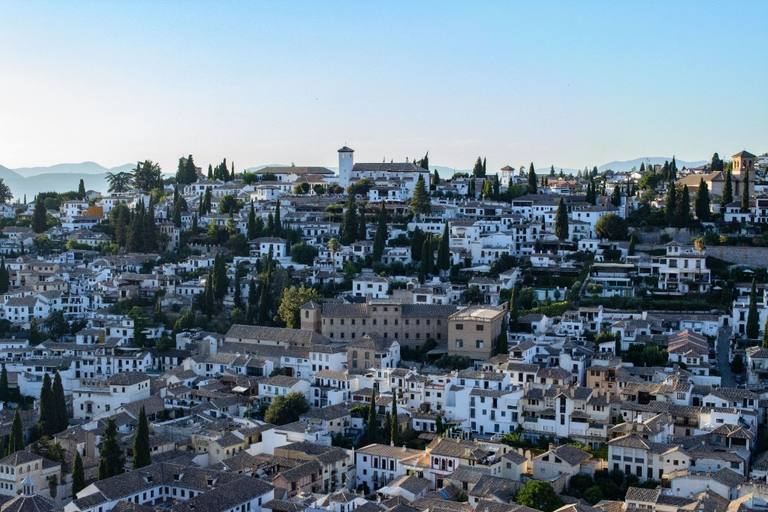
Why do the Alhambra and Albayzín face each other in Granada?
The famous view across Granada is not a staged composition. The Alhambra and Albayzín occupy two neighbouring hills separated by the Darro — a palatine city and a residential city that still explain one another.
Read →