

Places
Why is Islamic heritage still so visible in southern Spain?
Córdoba, Seville and Granada preserve different layers of Al-Andalus. The legacy is visible not because one style survived unchanged, but because later cities kept building with, over and around what came before.
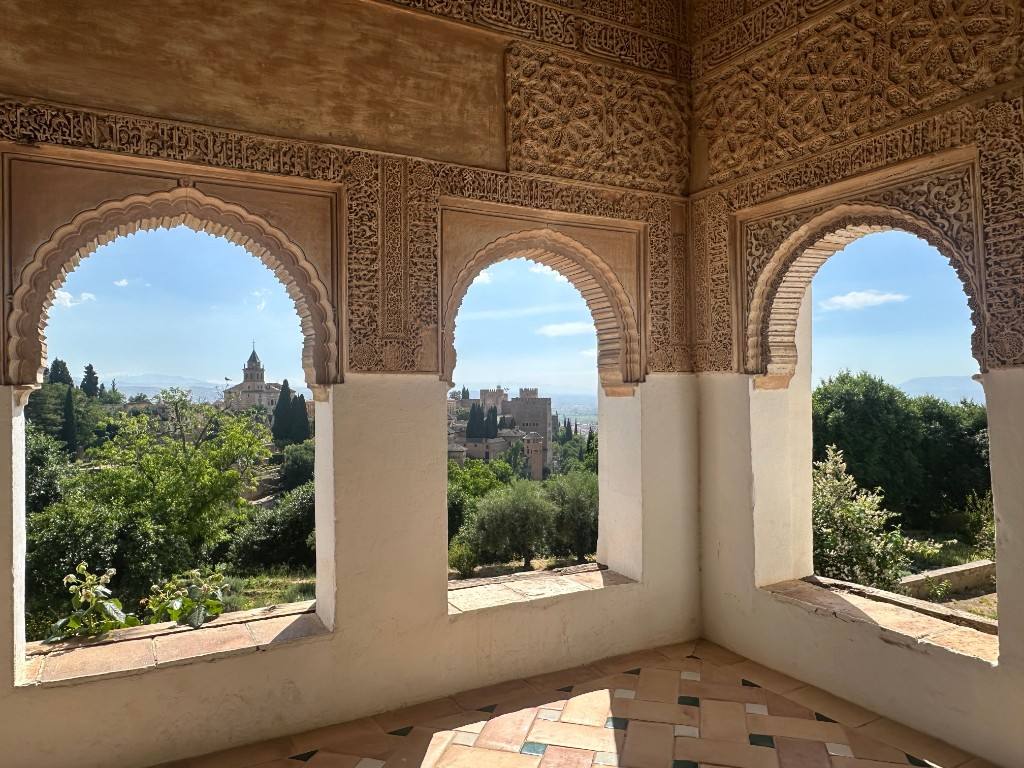
It is tempting to describe almost eight centuries of Muslim presence in Iberia as one long architectural period. The cities themselves resist that simplification. Córdoba speaks the language of the caliphate, Seville preserves an Almohad minaret inside a Christian cathedral complex, and Granada holds the final Nasrid palaces opposite a neighbourhood whose medieval street plan still survives. The useful question is not “what did Islam leave behind?” but how those layers continued to be used after political power changed.
Al-Andalus was not one single period
Muslim rule in parts of the Iberian Peninsula began in 711 and political Muslim presence in Granada lasted until 1492. Between those dates, however, power changed repeatedly: emirates, the Caliphate of Córdoba, smaller taifa kingdoms, North African dynasties and finally the Nasrid kingdom of Granada belonged to different moments.
That matters when looking at architecture. A horseshoe arch in Córdoba, Almohad brickwork in Seville and the refined palace architecture of the Alhambra do not belong to one frozen “Moorish style”. They are separated by centuries, rulers, technologies and local conditions.
Seeing those differences makes the heritage more interesting. Instead of one decorative vocabulary spread across the south, we begin to see a sequence of cities adapting older ideas to new needs.
Córdoba: when a city became the centre
Córdoba became the seat of an independent caliphate under Abd al-Rahman III in 929, after already serving as the capital of the emirate. UNESCO describes the city between the eighth and tenth centuries as one of the principal urban and cultural centres of the western world.
The Mosque-Cathedral makes that history unusually tangible. The mosque was expanded across generations; after the Christian conquest in the thirteenth century it became a cathedral, and later additions changed the building again. The result is not a clean handover from one culture to another. It is a structure where different periods remain physically present in the same space.
Around it, the historic centre also preserves the relationship between houses, courtyards, water and the Guadalquivir. Some of those traditions have older Roman roots and later Andalusi transformations, which is another reminder that urban culture rarely has only one origin.
In southern Spain, heritage is often most visible where one period did not completely erase the previous one.
Seville: a minaret inside another city
Seville offers a different layer. The Giralda began as the minaret of the Almohad mosque and later became the cathedral’s bell tower. Its lower fabric still carries the geometry and brickwork of Almohad architecture, while later Christian additions transformed the top and the building’s function.
Nearby, the Real Alcázar shows another form of continuity. Christian rulers continued to use architectural languages shaped by Islamic Iberia, producing what we now recognise as Mudéjar work. UNESCO describes the cathedral and Alcázar together as evidence of both Almohad civilisation and Christian Andalusia.
This is important because “Islamic influence” did not end the day a city changed rulers. Craftspeople, decorative systems and building habits could continue under new patrons. Political borders changed faster than architectural knowledge.
Granada: water, gardens and a city on two hills
Granada is the late chapter of the story, but not a footnote. The Nasrid dynasty ruled from 1238 until 1492, and the Alhambra developed as a palatine city rather than a single palace. Across the Darro, the Albayzín preserved much of the medieval urban structure of the older city.
Water is one of the clearest ways to read the relationship between architecture and landscape. UNESCO emphasises the hydraulic systems of the Alhambra and Generalife: water irrigated productive gardens, cooled and animated courtyards, and became part of the visual composition itself.
The two hills matter together. The Alhambra represents courtly power; the Albayzín represents a residential city. Looking from one toward the other makes Granada easier to understand than treating the palace as an isolated monument.
The legacy is also in habits of space
The most obvious remains are monumental, but the longer legacy is also spatial: the use of courtyards, shade, water, enclosed gardens, patterned surfaces and transitions between public and private space. None of these ideas belongs exclusively to one civilisation, and many have older or parallel Mediterranean histories. Their particular combinations in Andalusia, however, were strongly shaped during centuries of Islamic rule.
Language carries another layer. Spanish and Portuguese contain many words of Arabic origin, a reminder that cultural exchange is not only visible in stone. The point is not to count them as trophies, but to notice how long political history can survive in ordinary vocabulary.
Looking without flattening the past
Calling every arch “Moorish” or every courtyard “Islamic” can hide as much as it reveals. Southern Spanish cities are interesting precisely because Roman, Islamic, Jewish and Christian histories overlap, and because later periods rebuilt earlier spaces rather than simply preserving them.
A closer look therefore means asking two questions at once: what period are we seeing, and what happened to it afterwards? The answer is often visible in the same building.
Related
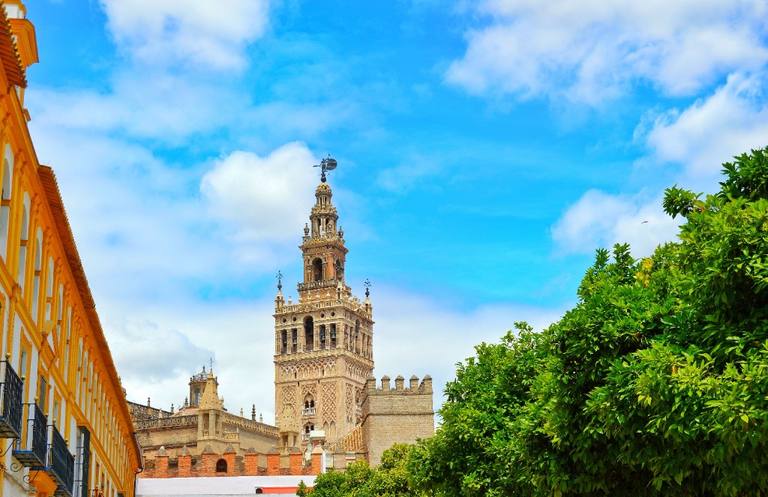
Giralda: how did a minaret become Seville’s symbol?
The Giralda did not survive by remaining unchanged. Its lower Almohad tower became part of a Christian cathedral, later gained a Renaissance bell stage and continued to define Seville’s skyline.
Read →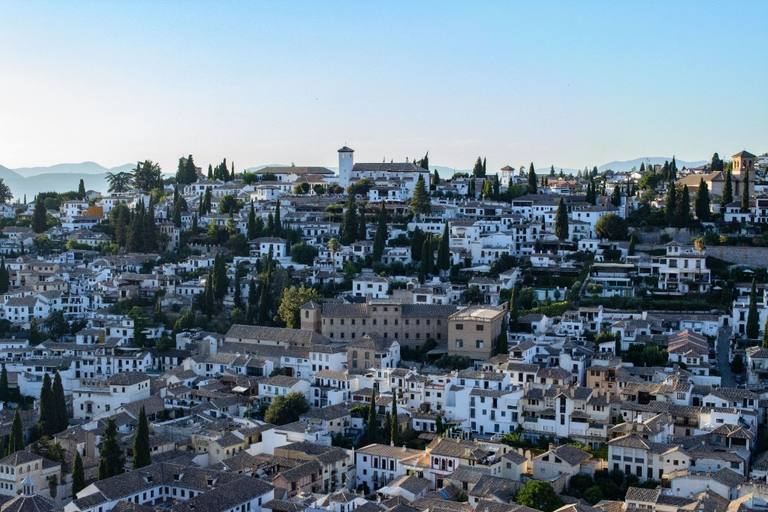
Why do the Alhambra and Albayzín face each other in Granada?
The famous view across Granada is not a staged composition. The Alhambra and Albayzín occupy two neighbouring hills separated by the Darro — a palatine city and a residential city that still explain one another.
Read →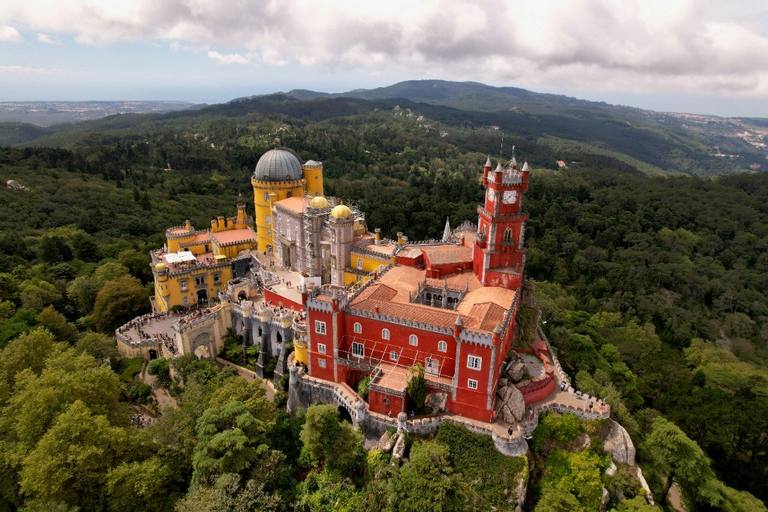
Why does Sintra look so different from the rest of Portugal?
Sintra’s strangeness is not the result of one colourful palace. Forested granite hills, older royal sites and nineteenth-century Romantic design were layered together until architecture and landscape became difficult to separate.
Read →