

Places
Why does Sintra look so different from the rest of Portugal?
Sintra’s strangeness is not the result of one colourful palace. Forested granite hills, older royal sites and nineteenth-century Romantic design were layered together until architecture and landscape became difficult to separate.
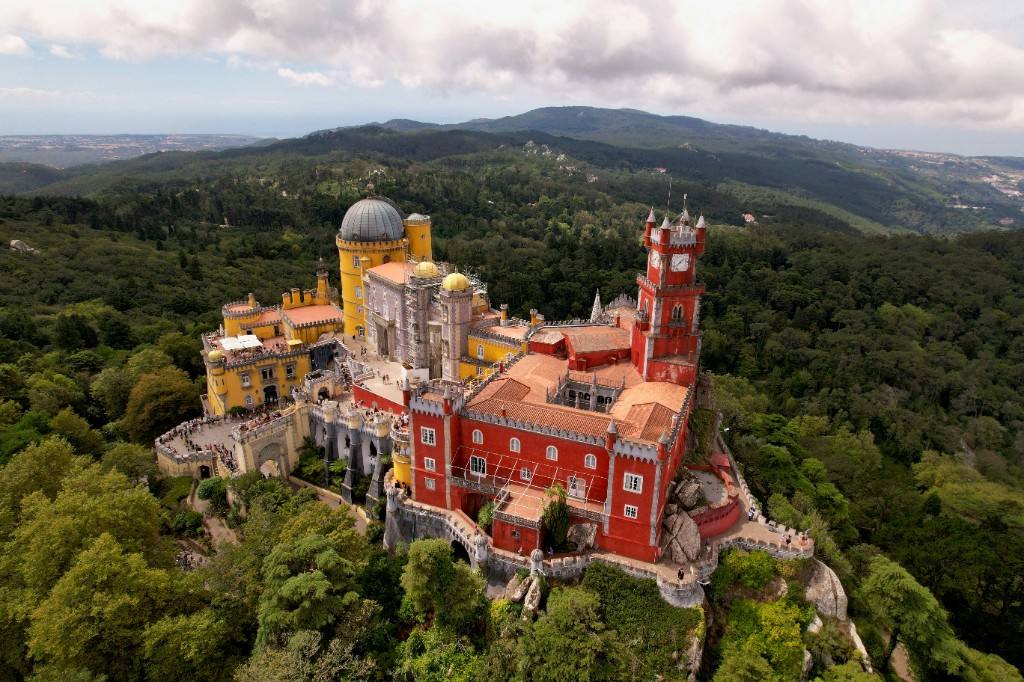
Sintra can feel like a deliberate interruption in the Portuguese landscape. Within a short distance, a medieval castle follows a mountain ridge, a royal palace anchors the town below, Pena Palace mixes historical styles above the forest and estates such as Monserrate dissolve architecture into exotic planting. The easiest explanation is not that Sintra belongs to a different country. It is that a very particular landscape was repeatedly redesigned by people who wanted it to feel different.
The landscape comes before Romanticism
UNESCO describes Sintra as a distinct cultural landscape built around a small chain of forested granite mountains. That physical setting matters. The Serra rises sharply, catches changing weather and creates enclosed slopes very different from the more open landscapes immediately around Lisbon.
Long before the nineteenth century, the area already held defensive, religious and royal sites. The Moorish Castle occupied the ridge; the Royal Palace developed in the town below. Sintra’s later Romantic image was therefore built on top of an older pattern of strategic and courtly occupation.
This is why the palaces should not be treated as decorative objects dropped into neutral scenery. The mountain was part of the decision to build here.
A royal retreat before it became a Romantic experiment
The Royal Palace in the town centre is a useful correction to the idea that Sintra begins with Pena. UNESCO dates its main surviving buildings to the fifteenth and early sixteenth centuries, while also noting the site’s earlier Moorish association.
The palace’s tiled interiors, late Gothic and Manueline elements show a court already using Sintra centuries before European Romanticism made the place fashionable in a new way.
This older royal presence helps explain continuity. The nineteenth century did not discover an empty mountain. It inherited a landscape already associated with withdrawal from the capital, residence and prestige.
Pena turned history into atmosphere
In the nineteenth century, Ferdinand II transformed the ruins of a monastery into Pena Palace and surrounded it with a vast Romantic park. UNESCO highlights the deliberate combination of Gothic, Egyptian, Moorish and Renaissance references.
The important word is deliberate. Pena was not trying to reconstruct one lost historical period accurately. Romantic design used the past imaginatively, allowing distant styles and references to coexist in a new composition.
That helps explain why the palace can feel theatrical without being superficial. The theatre is part of the design philosophy. Architecture becomes a way of producing mood.
Sintra’s Romantic architecture does not ask, ‘Which period are we in?’ It asks, ‘What kind of world can several periods create together?’
The gardens are not background
The Romantic project extended beyond buildings. Pena’s park combined local vegetation with imported species, and Monserrate developed another highly designed landscape in which architecture, water, paths and exotic planting worked together.
UNESCO’s description of Sintra repeatedly treats gardens and parks as central to the site’s importance. That is unusual and useful. The heritage value does not stop at the palace wall.
Moving through these estates, views are revealed and hidden deliberately. A path can be as designed as a façade. A stand of trees can control anticipation before a building appears. The landscape is architectural.
Why Sintra should not be reduced to ‘fairytale’
‘Fairytale’ is an understandable reaction to Sintra, but it can flatten the place into visual novelty. The town is interesting because several very different historical systems remain visible: medieval defence, royal residence, Romantic experimentation and later symbolic estates such as Regaleira.
The better question is therefore not which palace is the strangest. It is how each period used the same mountain differently. The Moorish Castle follows the ridge; the Royal Palace anchors the town; Pena commands the height; Monserrate builds an inward garden world.
Once the landscape becomes the main character, Sintra stops looking like an exception without explanation.
Related
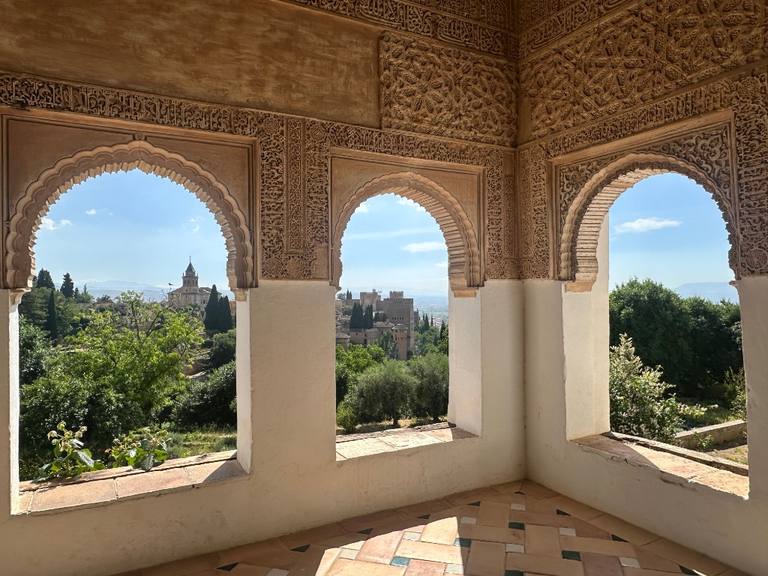
Why is Islamic heritage still so visible in southern Spain?
Córdoba, Seville and Granada preserve different layers of Al-Andalus. The legacy is visible not because one style survived unchanged, but because later cities kept building with, over and around what came before.
Read →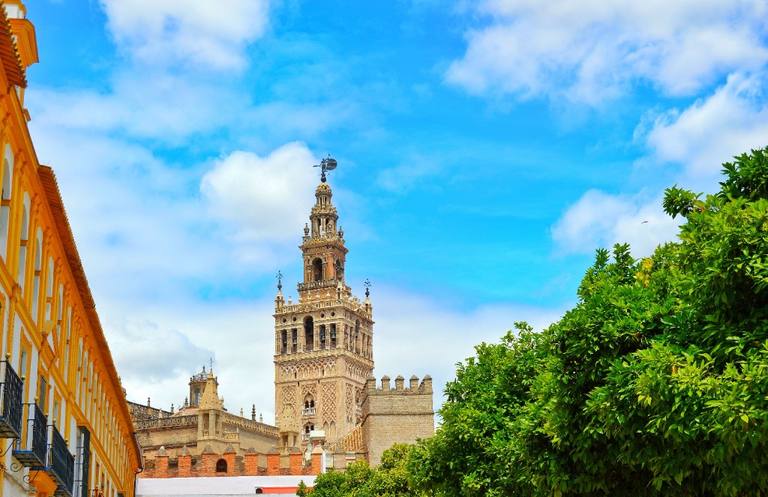
Giralda: how did a minaret become Seville’s symbol?
The Giralda did not survive by remaining unchanged. Its lower Almohad tower became part of a Christian cathedral, later gained a Renaissance bell stage and continued to define Seville’s skyline.
Read →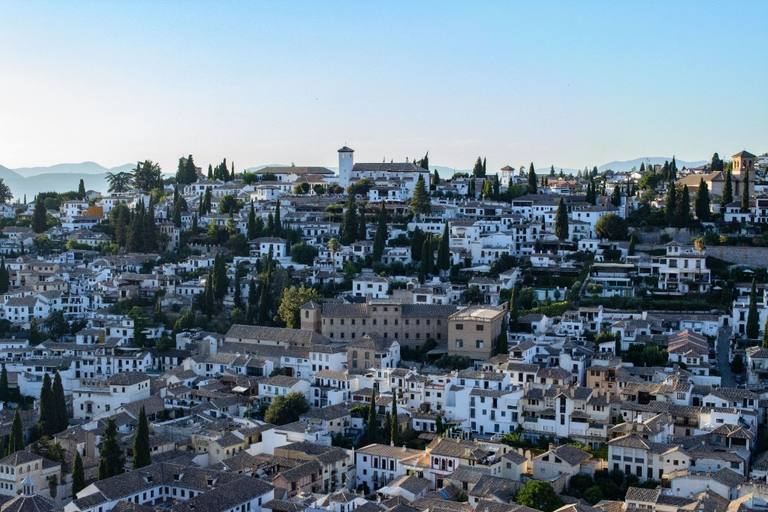
Why do the Alhambra and Albayzín face each other in Granada?
The famous view across Granada is not a staged composition. The Alhambra and Albayzín occupy two neighbouring hills separated by the Darro — a palatine city and a residential city that still explain one another.
Read →