

Places
Giralda: how did a minaret become Seville’s symbol?
The Giralda did not survive by remaining unchanged. Its lower Almohad tower became part of a Christian cathedral, later gained a Renaissance bell stage and continued to define Seville’s skyline.
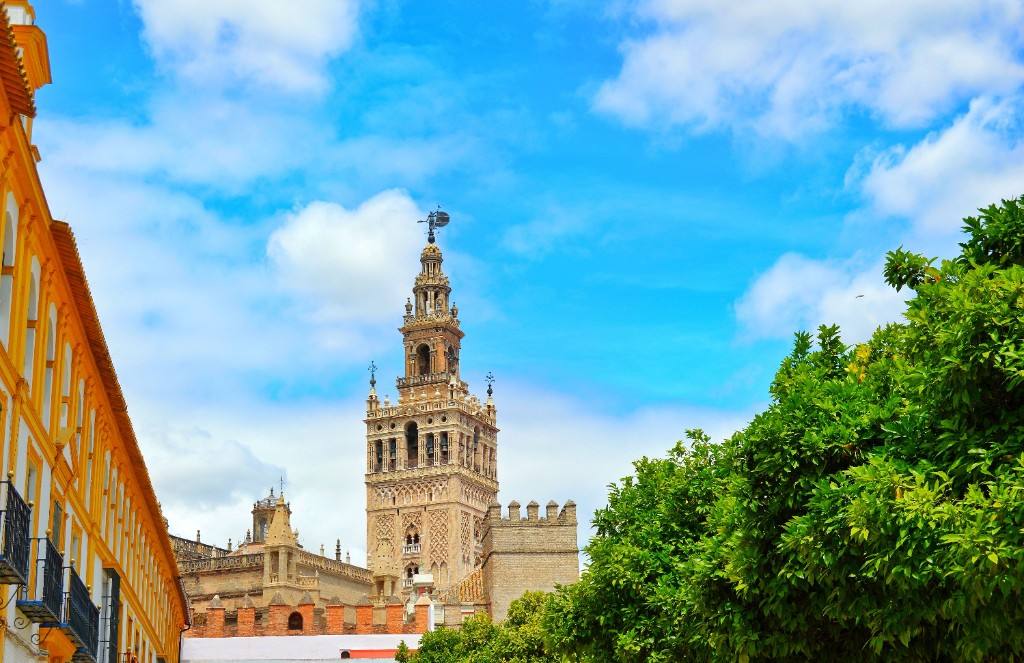
Some monuments survive because later generations protect them as relics. The Giralda survived in a more complicated way: it kept being useful. Built as the minaret of Seville’s Almohad mosque, the tower was absorbed into a Christian cathedral complex and eventually transformed into a bell tower. The result is not a frozen fragment of Islamic Seville or a purely Christian monument, but a structure in which political and religious change is still visible vertically.
The tower began with a different city
The Giralda was completed as the minaret of Seville’s Almohad mosque at the end of the twelfth century; the IBERYUS source archive gives 1198 as the completion date. Its purpose belonged to the religious and urban world of Islamic Seville, and its brick construction carried the geometric language of Almohad architecture.
The minaret was not an isolated tower. It belonged to a larger mosque complex and to a city whose political centre, religious life and architectural references were different from those that surround the tower today. Remembering that original context prevents the lower part from becoming merely an exotic decorative base for the cathedral.
Conquest changed the function before it changed the form
After Seville passed into Christian rule in the thirteenth century, the former mosque site entered a new religious system. The minaret did not disappear. It was reused, eventually becoming the bell tower of the cathedral that rose on the site.
Reuse can be read in several ways at once. It was practical: a tall, well-built tower already existed. It was also symbolic: the most visible element of the previous religious landscape was brought into the architecture of the new order. Preservation and appropriation can therefore occupy the same building.
This is one reason the Giralda is more revealing than a monument that belongs clearly to a single period. The transition is not hidden behind a museum label. It is the structure.
The Giralda did not become Seville’s symbol by staying the same. It became one by surviving change.
The top belongs to another century
The tower’s profile continued to change long after the Christian conquest. In the sixteenth century, a Renaissance bell stage reshaped its upper section. The bronze figure known as the Giraldillo was placed above, functioning as a weather vane and eventually giving the tower the name by which it is now known.
That vertical contrast is one of the easiest details to read from the street. The lower body speaks through brick, repeating geometry and Almohad proportions; the upper stage uses a later architectural vocabulary. The point is not to decide which half is more ‘authentic’. Both are authentic to different moments in the building’s life.
Seen this way, the tower behaves almost like a timeline: the eye moves upward through political and architectural change.
Why ramps matter
Inside, the ascent is known for ramps rather than a conventional staircase through much of the tower. Tourist explanations often connect the design with mounted access during the minaret’s original use. The supplied research repeats that tradition, but the stronger point does not depend on the horseback story.
The ramps make the tower feel different from a later church belfry. Movement upward is gradual and continuous, and the thickness of the structure becomes physically legible. The route is a reminder that the tower’s interior logic predates its Christian bell function.
Architecture is often easiest to understand when the body has to follow it. In the Giralda, climbing is part of reading the building.
One tower, several Sevilles
From a distance the Giralda looks unified because centuries of change have become one silhouette. Up close, the unity breaks apart. That is where the building becomes most useful: it makes Seville’s habit of reuse visible without requiring us to romanticise the transitions.
The tower can be admired as Almohad architecture, as part of a Christian cathedral and as a Renaissance intervention. None of those descriptions is sufficient on its own. Its importance comes from the fact that all three remain readable at once.
Related
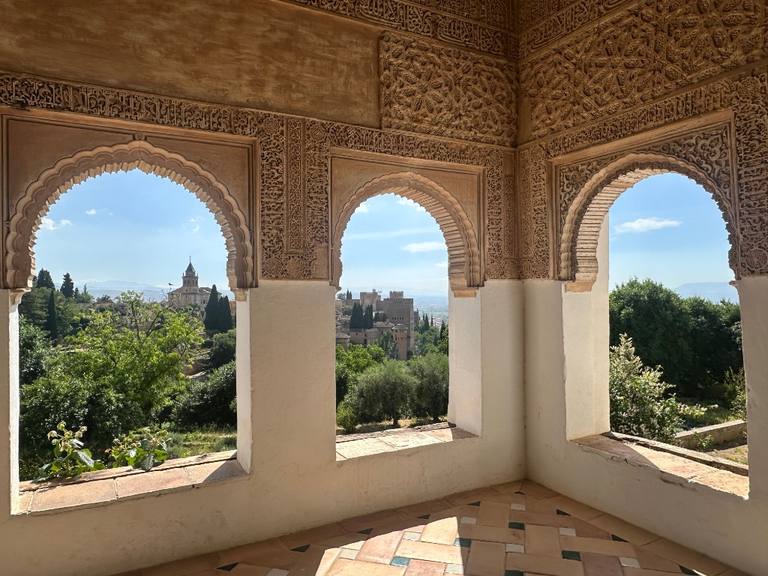
Why is Islamic heritage still so visible in southern Spain?
Córdoba, Seville and Granada preserve different layers of Al-Andalus. The legacy is visible not because one style survived unchanged, but because later cities kept building with, over and around what came before.
Read →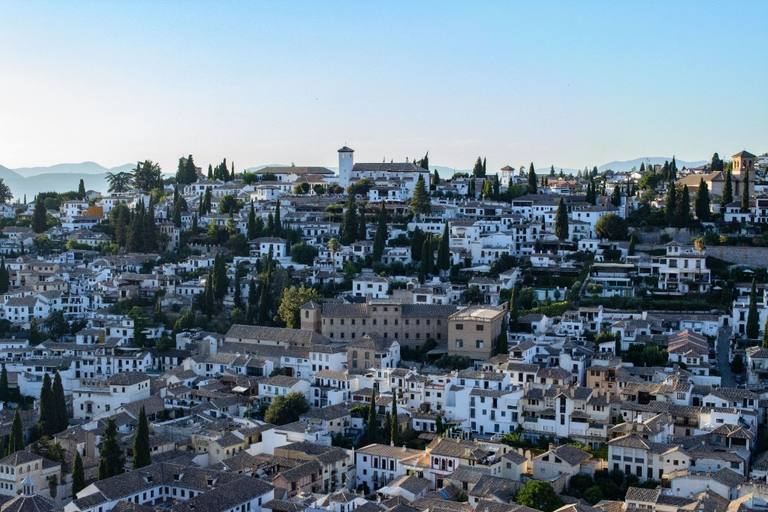
Why do the Alhambra and Albayzín face each other in Granada?
The famous view across Granada is not a staged composition. The Alhambra and Albayzín occupy two neighbouring hills separated by the Darro — a palatine city and a residential city that still explain one another.
Read →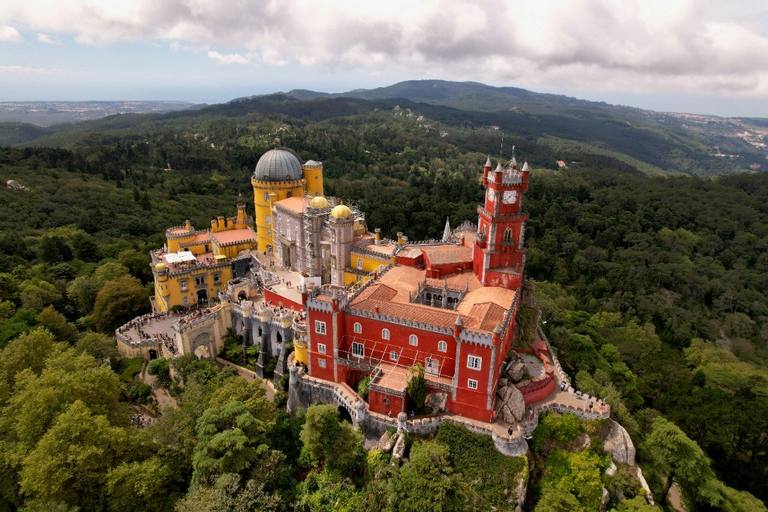
Why does Sintra look so different from the rest of Portugal?
Sintra’s strangeness is not the result of one colourful palace. Forested granite hills, older royal sites and nineteenth-century Romantic design were layered together until architecture and landscape became difficult to separate.
Read →