
Jerónimos Monastery
Belém, Lisbon
At Jerónimos, religion, royal ambition and Portugal’s maritime expansion meet in the same stone. Its scale matters, but the story becomes clearer in the carved details.
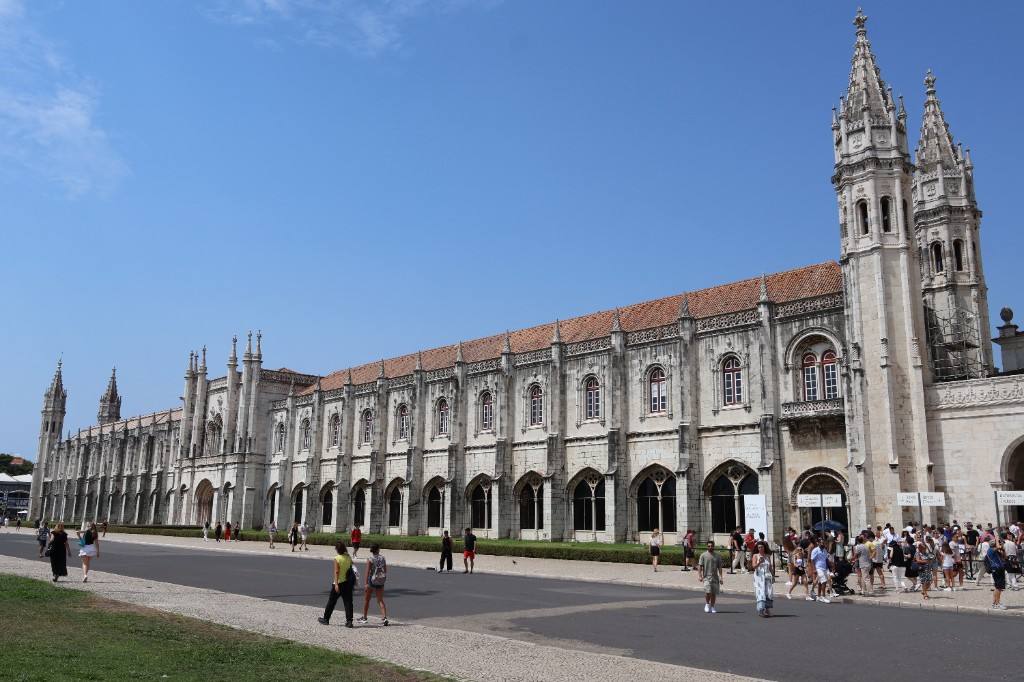
Construction of the monastery began in 1502 during the reign of Manuel I, at a moment when Portuguese overseas activity was expanding rapidly. The building became one of the best-known examples of Manueline architecture, a Portuguese late-Gothic language enriched by dense carved ornament.
Jerónimos was a religious foundation, but its location and decoration connect it closely with the maritime world of Belém. Rope-like forms, botanical carving and other elaborate stone details appear throughout the complex. Today the monastery forms part of the UNESCO World Heritage property shared with Belém Tower.
Jerónimos makes the relationship between maritime expansion and royal representation unusually visible. The IBERYUS source archive links its construction to revenues from overseas spice trade, placing the monastery inside the economic system of the period rather than beside it.
That context changes the way the building can be read. Its elaborate stonework is not only decorative virtuosity; it belongs to a monarchy that wanted power, faith and overseas ambition to be represented together. The later presence of tombs associated with Vasco da Gama and Luís de Camões strengthened the monastery’s role in Portuguese national memory.
The monastery rose during the reign of Manuel I as Lisbon’s western riverfront became increasingly connected with long-distance voyages and trade. Its religious community served a site closely associated with departure, while the architecture turned the wealth and visual language of the period into a monumental setting.
Over time Jerónimos became more than a monastery. Its association with explorers, poets and the public memory of the so-called Age of Discoveries gave it a national symbolic role. That later memory is important to separate from the building’s original religious function: the place accumulated meanings across different centuries.
What might be worth noticing?
Do not try to take in the whole façade at once. Look at how the stone behaves around portals, columns and openings. Some carvings recall ropes and other maritime forms; elsewhere botanical and heraldic details take over. The shift in scale — from the mass of the monastery to almost lace-like carving — is one of the building’s strongest effects.
A small detail
The useful question is not simply ‘which symbol represents the sea?’ but how maritime references are absorbed into a religious building. The same stone can carry structural weight, devotional meaning and royal imagery. Looking for those overlaps makes Manueline architecture easier to understand than treating it as a catalogue of decorative motifs.
Related articles
Related
Belém Tower
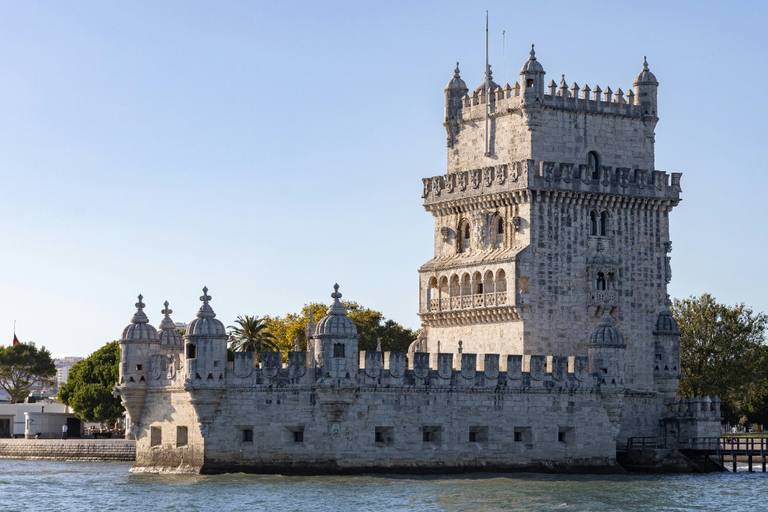
Built on the Tagus during the reign of Manuel I, Belém Tower brings defence, royal symbolism and the maritime imagination of early-sixteenth-century Portugal into one compact monument.
Read →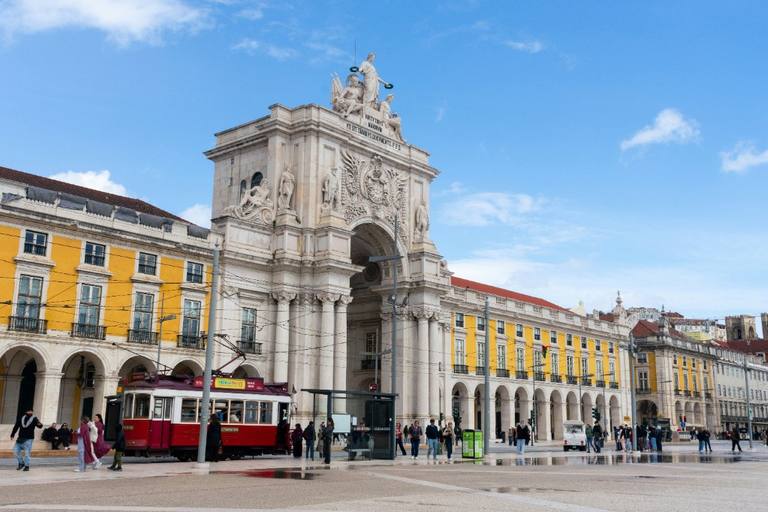
Praça do Comércio
Lisbon’s great river square is one of the clearest places to see how the city changed after 1755: a former royal site rebuilt as an ordered civic and commercial space facing the Tagus.
Read →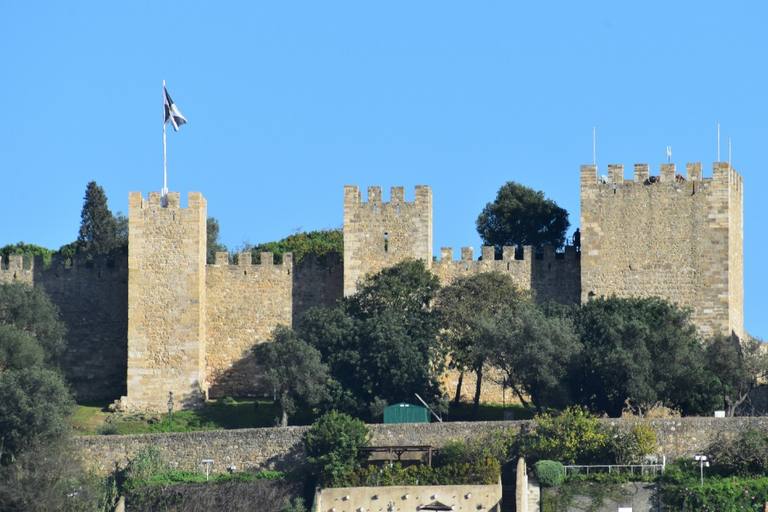
São Jorge Castle
Above Alfama, São Jorge Castle makes Lisbon’s geography and changing political history visible at the same time: a fortified hill whose meaning shifted as the city changed rulers.
Read →