

São Jorge Castle
Above Alfama, Lisbon
Above Alfama, São Jorge Castle makes Lisbon’s geography and changing political history visible at the same time: a fortified hill whose meaning shifted as the city changed rulers.
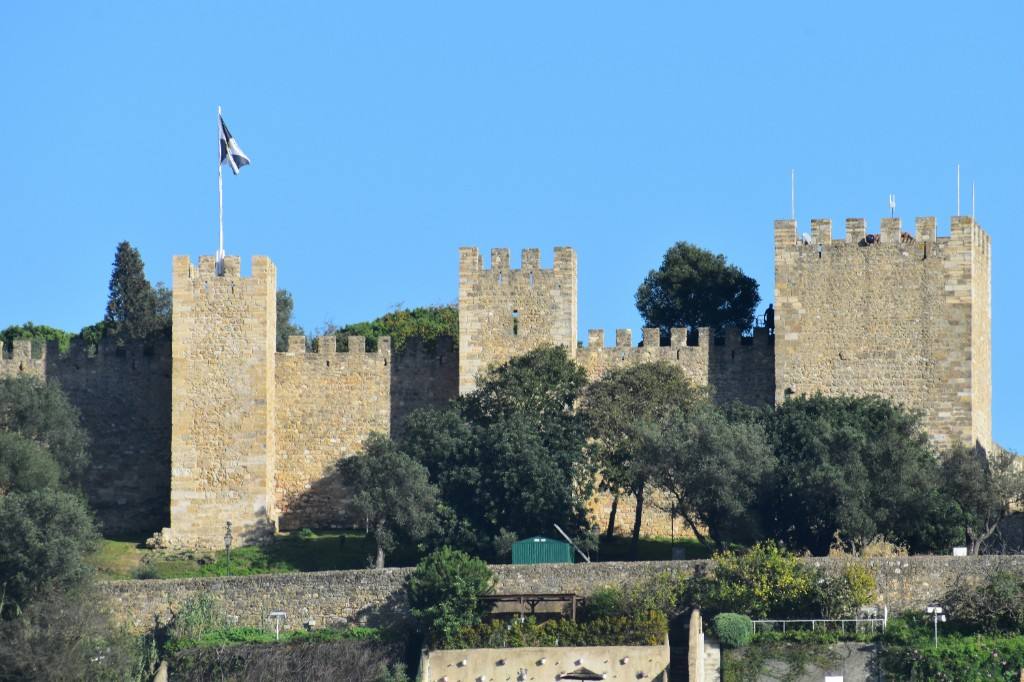
São Jorge Castle occupies one of the most strategic high points above central Lisbon. The site belongs to an old area of settlement, and the supplied sources describe successive Roman, Visigothic and Moorish layers before the Portuguese conquest of the city in 1147.
What visitors see today is therefore best understood as a medieval fortified complex on a hill with a much longer history. Walls, towers and battlements make the military logic easy to recognise, while the position above Alfama and the Tagus explains why this ground mattered long before it became a viewpoint.
The castle brings geography and political history together. From the walls, the relationship between hill, old neighbourhood and river becomes immediately legible. A defensive site only makes sense when the territory it controlled can be seen, and São Jorge offers that connection unusually clearly.
It also allows several periods of Lisbon’s history to occupy one place without pretending they are the same. The hill was strategically important under Muslim rule, was taken by Afonso Henriques in 1147 and later became associated with the Portuguese monarchy. The value lies less in finding a single ‘original’ castle than in understanding why the same ground kept being reused.
In 1147, Afonso Henriques — remembered as Portugal’s first king — captured Lisbon with the help of crusading forces. The castle and fortified hill passed into the political world of the emerging Portuguese monarchy. The supplied source also notes that the site later served royal functions during the early centuries of the kingdom.
That history should not be compressed into a simple before-and-after story. The hill was important before 1147 and continued to change afterwards. Its military, royal and symbolic roles belong to different moments, which is why the site works well as a place to discuss continuity as well as conquest.
What might be worth noticing?
Spend as much time looking outward as at the walls. From the hill, notice the steep drop into Alfama, the line of the Tagus and the flatter geometry of the lower city beyond. The view is not separate from the castle’s history — it explains the strategic choice of the site.
Then return to the fortifications themselves. The change from broad panorama to narrow passages and battlements helps show how landscape and defence were designed to work together.
A small detail
One useful comparison is with Baixa below. From the castle, the older hill neighbourhoods appear irregular while the post-1755 centre reads more clearly as an ordered grid. The viewpoint therefore connects two stories usually told separately: medieval Lisbon on the heights and the reconstructed city on the plain.
Peacocks in the gardens are a memorable present-day detail, but they are not the reason the hill matters. The stronger detail is the geography itself.
Related articles
Related
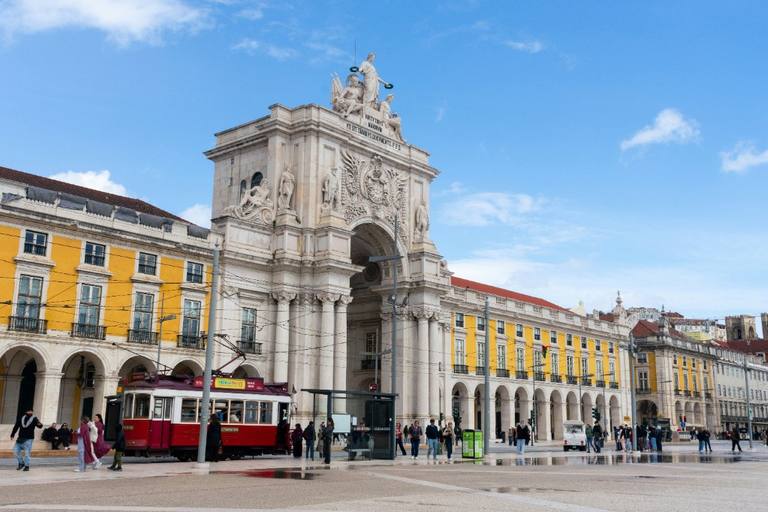
Praça do Comércio
Lisbon’s great river square is one of the clearest places to see how the city changed after 1755: a former royal site rebuilt as an ordered civic and commercial space facing the Tagus.
Read →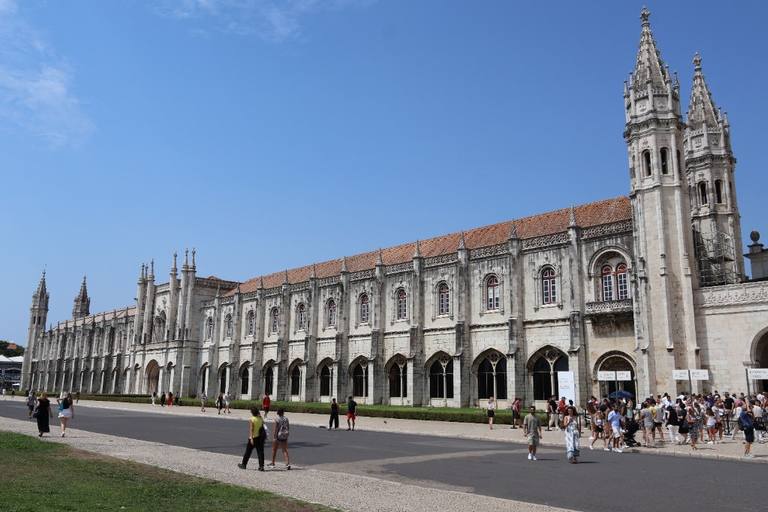
Jerónimos Monastery
At Jerónimos, religion, royal ambition and Portugal’s maritime expansion meet in the same stone. Its scale matters, but the story becomes clearer in the carved details.
Read →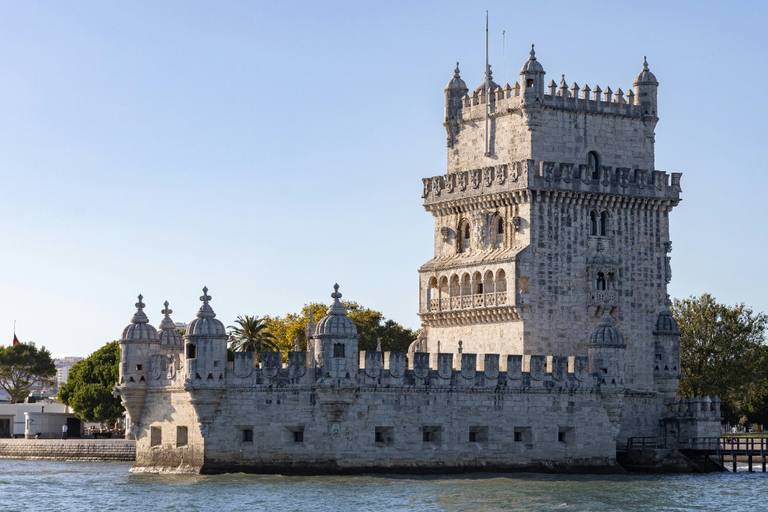
Belém Tower
Built on the Tagus during the reign of Manuel I, Belém Tower brings defence, royal symbolism and the maritime imagination of early-sixteenth-century Portugal into one compact monument.
Read →