

History
Why is Belém Lisbon’s memory of the sea?
At Belém, Lisbon’s maritime expansion became architecture. The monastery, tower and later monuments tell not only how Portugal went to sea, but how those voyages were remembered — and what that memory leaves out.
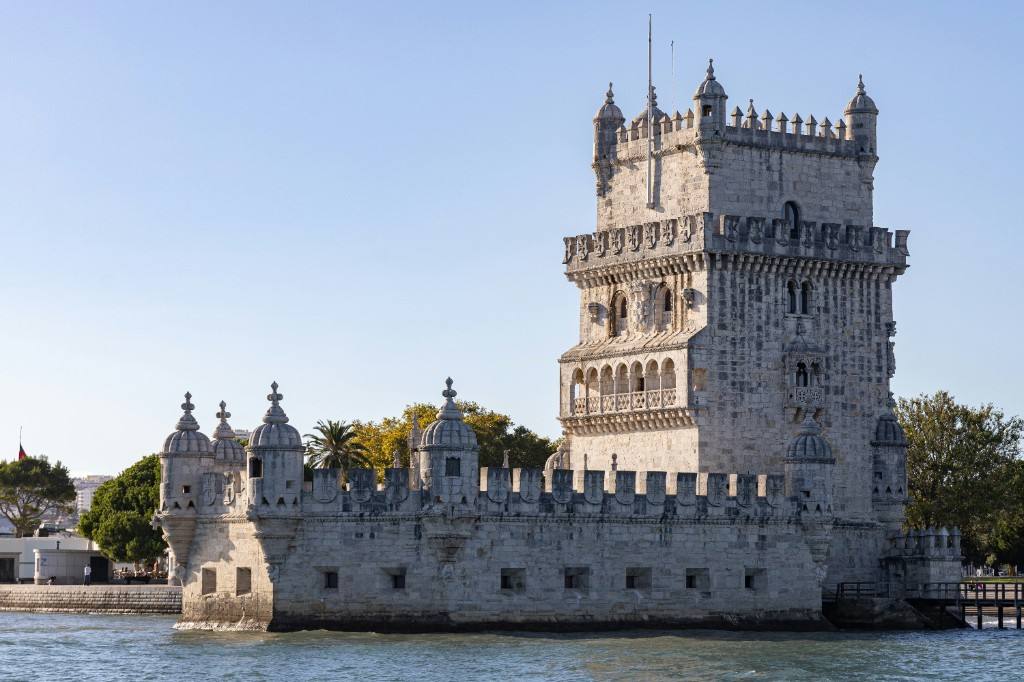
Standing on the Tagus at Belém, it is easy to read the river as scenery. In the fifteenth and sixteenth centuries it was infrastructure: the route through which ships, people, goods, information and power moved between Lisbon and an expanding network of ports. The monuments on this western edge of the city turned that movement into stone. Their beauty is real; so is the harder history behind it.
First, the river
Lisbon’s maritime history begins with geography. The Tagus opens toward the Atlantic, giving the city a sheltered port with direct access to ocean routes. By the Age of Discoveries, Lisbon had become one of the principal European points through which long-distance voyages were organised and supplied.
That outward orientation reshaped the western riverfront. Belém was not the centre of everyday Lisbon in the way Baixa would later become, but it acquired a powerful ceremonial role: a threshold between the capital and routes that stretched far beyond Europe.
The landscape still makes sense from the water. The monastery sits slightly back; the tower marks the river edge; later memorial architecture fills the space between them. Different centuries are explaining the same relationship between city and departure.
When maritime power became stone
Construction of the Jerónimos Monastery began in 1502 under King Manuel I. The royal foundation was closely tied to seafarers leaving Lisbon, and the Hieronymite community offered spiritual assistance to those departing. Its elaborate Manueline ornament made the new maritime order visible in architecture.
Ropes, botanical forms, heraldic symbols and dense stone carving are often read as the visual language of that period. The monastery does not simply stand near the history of expansion; it was created inside it. IBERYUS source material also links its financing to wealth generated by overseas trade.
Vasco da Gama’s place in the church’s funerary memory strengthens that connection. The building became a place where voyage, monarchy, religion and national memory could be brought together.
A defensive tower that became a symbol
The Tower of Belém was built on the Tagus in the early sixteenth century, during the reign of Manuel I. It had a defensive function at the entrance to Lisbon’s port, but its architecture also carried the symbolic language of the maritime state.
The tower became closely tied in public memory to Vasco da Gama’s expedition and the wider era of Portuguese maritime expansion. Its stonework combines Manueline elements with forms that reveal how Portuguese architecture was also shaped by contact and exchange.
Today the tower is read very differently. It is one of Portugal’s most recognisable images, detached in many photographs from the political and commercial system that produced it. Looking a little closer means putting the monument back into that larger network.
Belém remembers not only the moment of departure, but the way later generations chose to remember those departures.
The word “discovery” needs a little care
The traditional Portuguese phrase “Age of Discoveries” reflects a European perspective: the lands reached by Portuguese ships were not empty and were not unknown to the people who lived there. Navigation, cartography and long-distance exchange expanded dramatically, but so did conquest, coercion and colonial rule.
The same networks that brought spices, metals, plants, information and wealth into European ports were also tied to the trafficking and enslavement of people, especially from Africa. Treating the period only as a heroic story of courage at sea removes a large part of what made the system work.
Belém becomes more meaningful when both sides remain visible. The monuments can be admired as architecture without turning the history they represent into a celebration without consequence.
Belém also tells us how memory was built later
Not everything on the Belém riverfront belongs to the sixteenth century. The Monument to the Discoveries was inaugurated in 1960, during the Estado Novo dictatorship, and was designed as a modern national monument to maritime expansion. Its ship-like form and procession of historical figures turn a complex past into a carefully staged public image.
This creates an unusual landscape. A sixteenth-century monastery, an early-sixteenth-century defensive tower and a twentieth-century nationalist monument stand within one walk. The question is no longer only what happened during the voyages, but how Portugal chose to remember them centuries later.
That is why Belém works so well as a place to read history. The river, the old monuments and the modern memorial do not say exactly the same thing. Their differences are part of the story.
Related
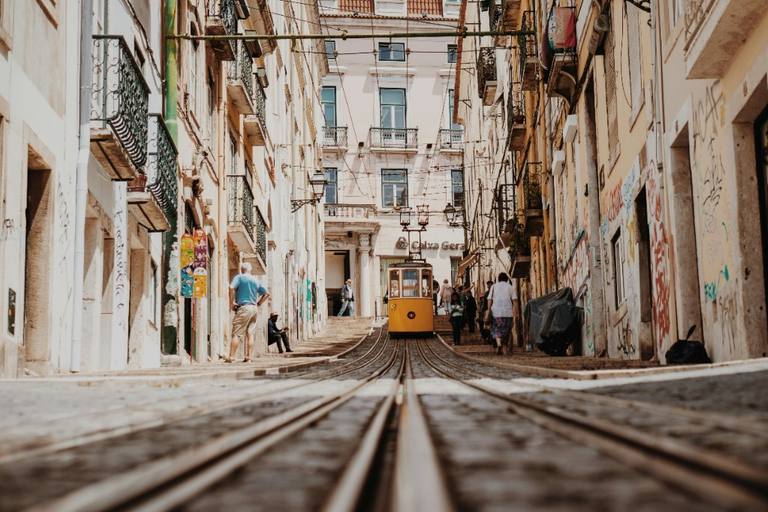
Why did Lisbon become a different city after 1755?
The earthquake, fires and tsunami of 1 November 1755 devastated Lisbon. The reconstruction that followed did something equally lasting: it changed the way the lower city was planned, built and walked.
Read →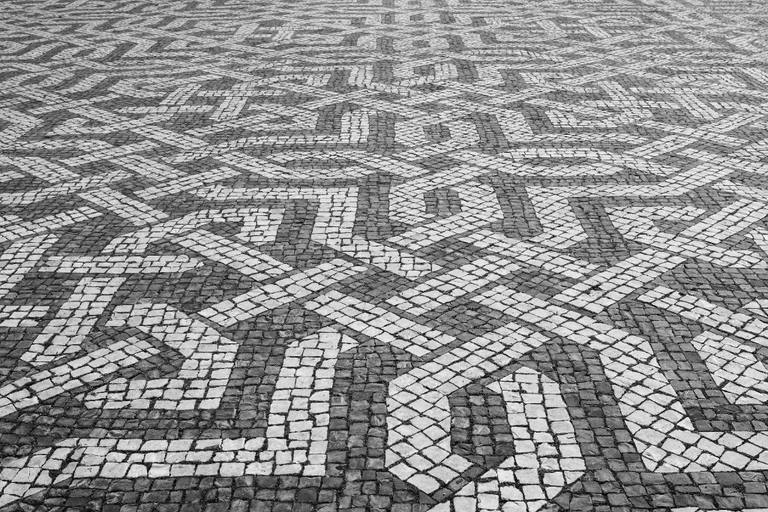
Why are Lisbon’s pavements black and white?
Calçada Portuguesa turns paving into a craft. Small pieces of stone, laid by hand, create patterns that have become part of the visual language of Lisbon and other Portuguese cities.
Read →
One peninsula, two different stories
Portugal and Spain share geography, long stretches of history and many cultural layers. What they do not share is one national story. Their differences make more sense when we look at how each political centre formed, expanded and remembered itself.
Read →