

Praça do Comércio
Baixa, on the Tagus
Lisbon’s great river square is one of the clearest places to see how the city changed after 1755: a former royal site rebuilt as an ordered civic and commercial space facing the Tagus.
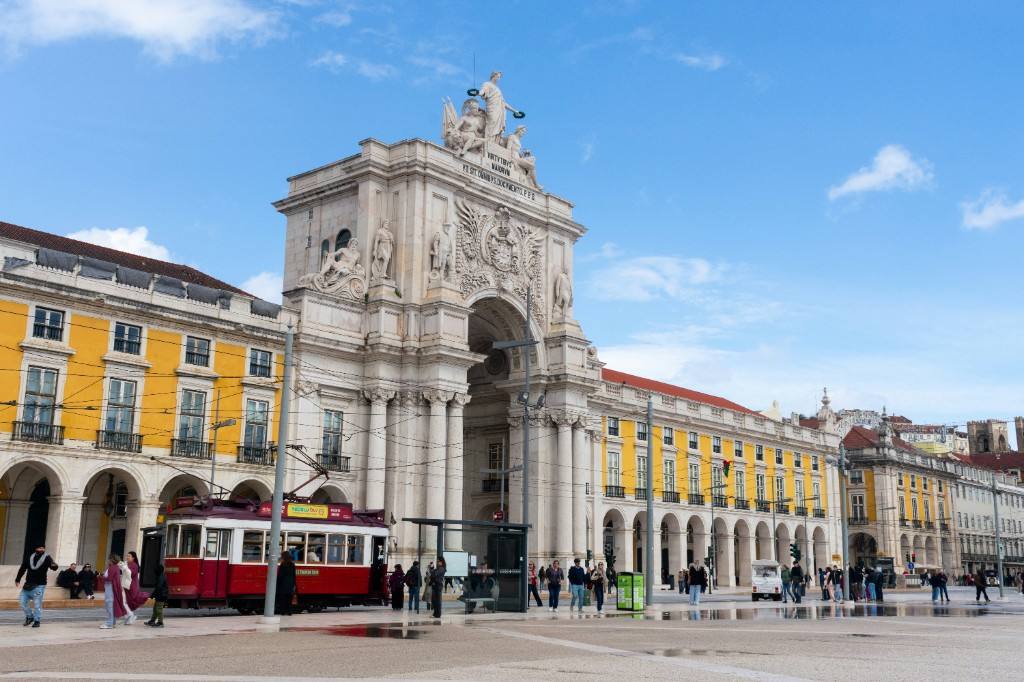
Praça do Comércio forms the southern edge of Baixa where the rebuilt centre meets the Tagus. Three sides are defined by long arcaded façades; the fourth opens directly toward the river. At the inland side, the Rua Augusta Arch leads from the square into the regular street grid of Baixa.
Before the earthquake of 1755, this waterfront was known as Terreiro do Paço and was closely tied to the royal palace. The present square therefore occupies a site that changed not only in appearance but also in meaning: from royal ground to one of the most important public spaces of the reconstructed city.
The square makes Lisbon’s post-earthquake planning unusually easy to read. The repeated façades, open geometry and direct connection to Rua Augusta belong to a larger effort to reorganise the lower city after disaster. Instead of reconstructing the lost palace terrace as it had been, the new centre created a monumental public and commercial space tied to the river.
It also explains why the Tagus is more than scenery in Lisbon. The city’s political, commercial and maritime histories all met along this edge. Standing here, the relationship between Baixa and the water becomes physical: one direction leads into the planned city, the other remains open.
On 1 November 1755, the earthquake and the fires that followed destroyed the royal palace on this site and devastated much of lower Lisbon. The reconstruction associated with the Marquês de Pombal reorganised Baixa with a more regular street system and new building principles.
Praça do Comércio became one of the strongest expressions of that new order. The former palace ground was recast as a commercial square, while Rua Augusta extended the logic of the rebuilt city northward. This is why the square belongs to the story of 1755 even though it is not a ruin: its present form is one of the consequences of the disaster.
What might be worth noticing?
Start with the missing fourth wall. The façades contain the square on three sides, but the river side remains open. Then turn toward the Rua Augusta Arch and notice how it frames the entrance into Baixa. The repeated arcades and measured façades become easier to understand when you read them together with the street grid behind the arch.
A small detail
Try walking the route in both directions. From Rua Augusta, the river appears gradually through the arch; from the river, the same arch gathers the city into a single axis. That change of direction helps explain the square better than a single panoramic view. Praça do Comércio is both an ending to the street grid and an opening beyond it.
Related articles
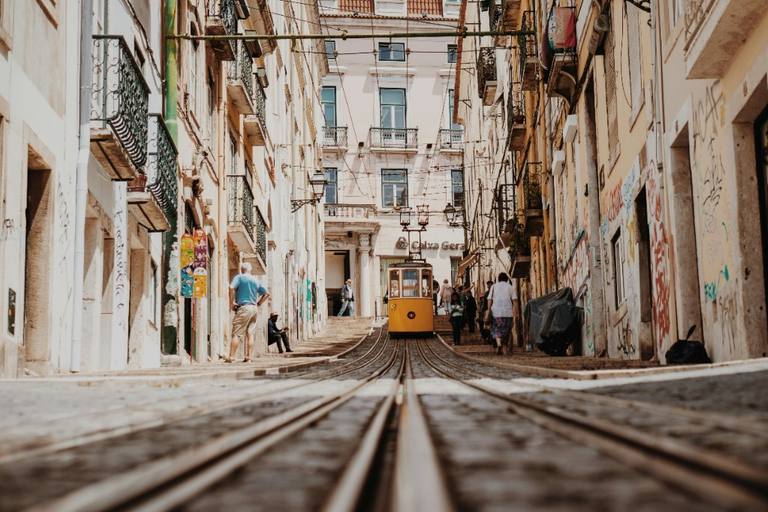
Why did Lisbon become a different city after 1755?
The earthquake, fires and tsunami of 1 November 1755 devastated Lisbon. The reconstruction that followed did something equally lasting: it changed the way the lower city was planned, built and walked.
Read →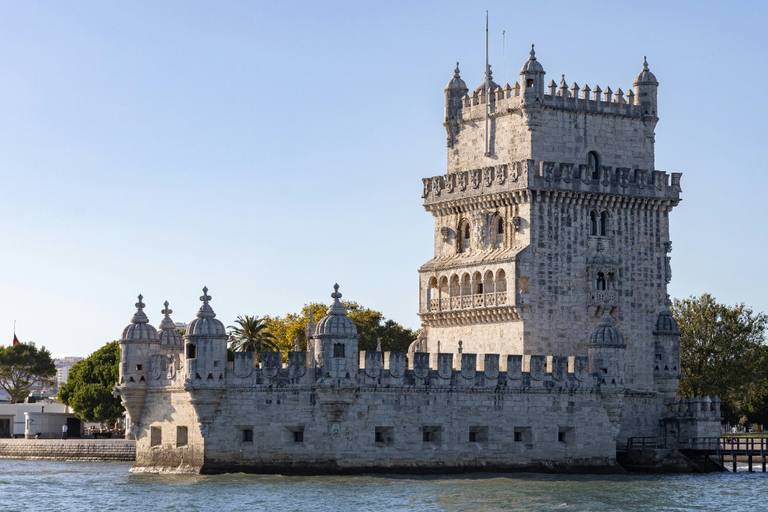
Why is Belém Lisbon’s memory of the sea?
At Belém, Lisbon’s maritime expansion became architecture. The monastery, tower and later monuments tell not only how Portugal went to sea, but how those voyages were remembered — and what that memory leaves out.
Read →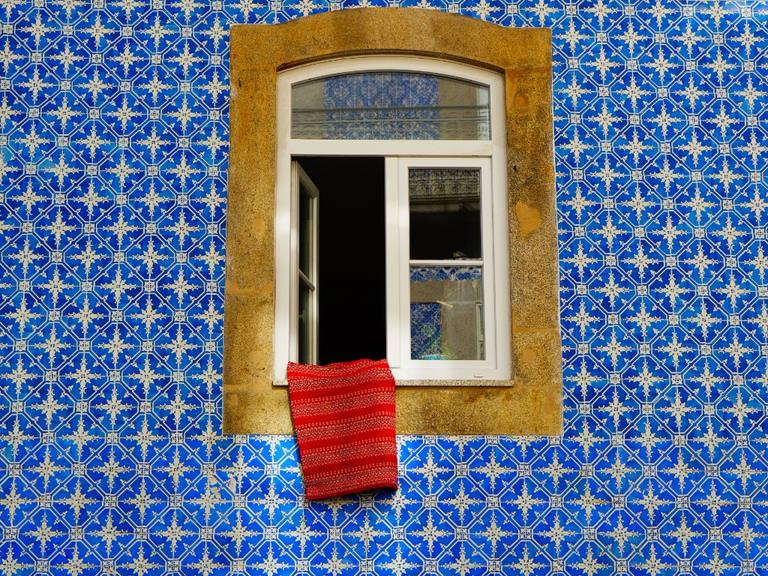
Why is Lisbon covered in tiles?
Azulejo is more than decoration. Over centuries, glazed tiles became part of Portugal’s architectural language — sometimes geometric, sometimes narrative, and still very much present in Lisbon’s everyday streets.
Read →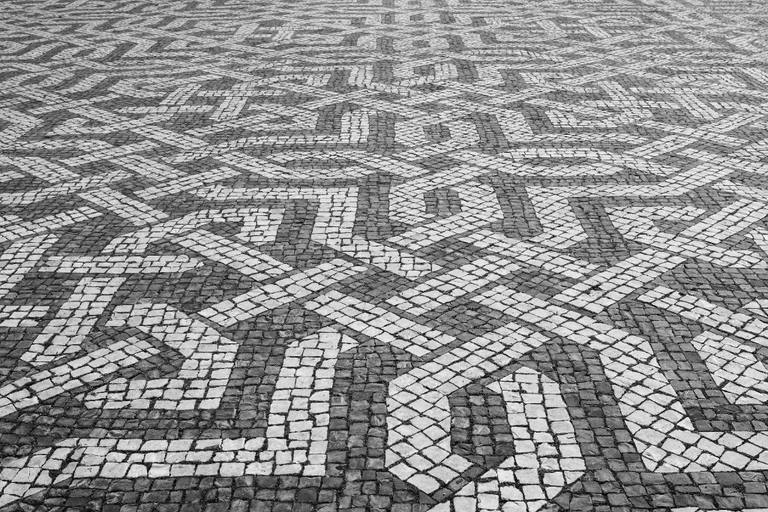
Why are Lisbon’s pavements black and white?
Calçada Portuguesa turns paving into a craft. Small pieces of stone, laid by hand, create patterns that have become part of the visual language of Lisbon and other Portuguese cities.
Read →
Related
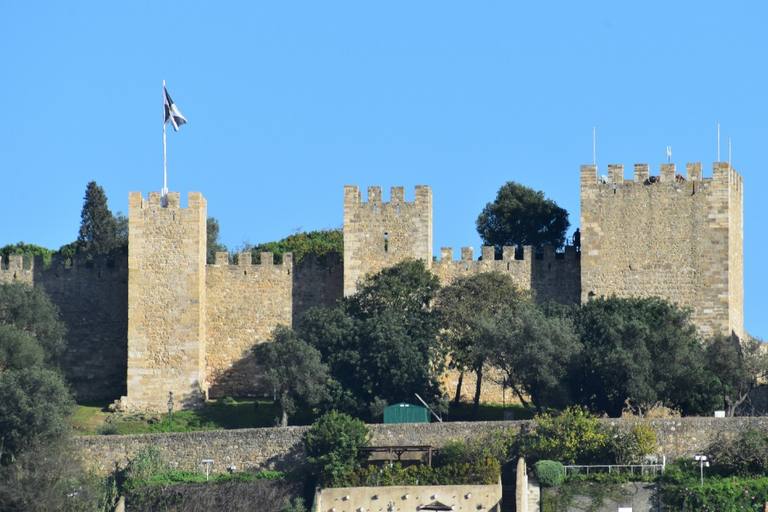
São Jorge Castle
Above Alfama, São Jorge Castle makes Lisbon’s geography and changing political history visible at the same time: a fortified hill whose meaning shifted as the city changed rulers.
Read →Belém Tower
Built on the Tagus during the reign of Manuel I, Belém Tower brings defence, royal symbolism and the maritime imagination of early-sixteenth-century Portugal into one compact monument.
Read →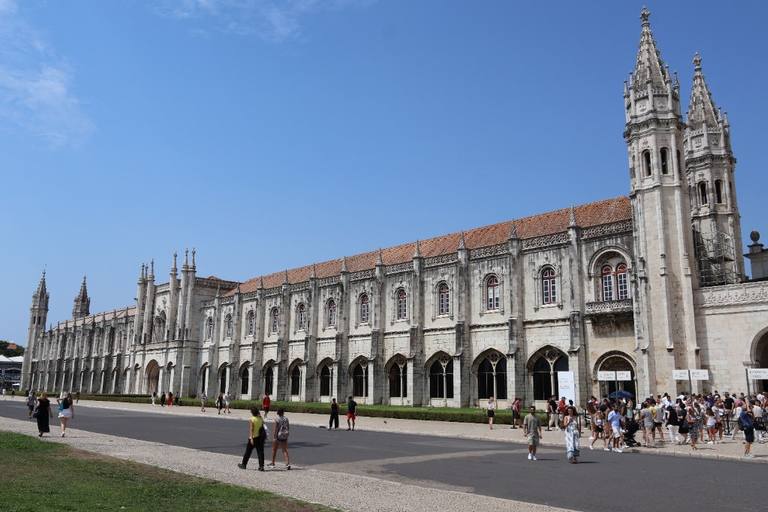
Jerónimos Monastery
At Jerónimos, religion, royal ambition and Portugal’s maritime expansion meet in the same stone. Its scale matters, but the story becomes clearer in the carved details.
Read →