

History
Why did Lisbon become a different city after 1755?
The earthquake, fires and tsunami of 1 November 1755 devastated Lisbon. The reconstruction that followed did something equally lasting: it changed the way the lower city was planned, built and walked.
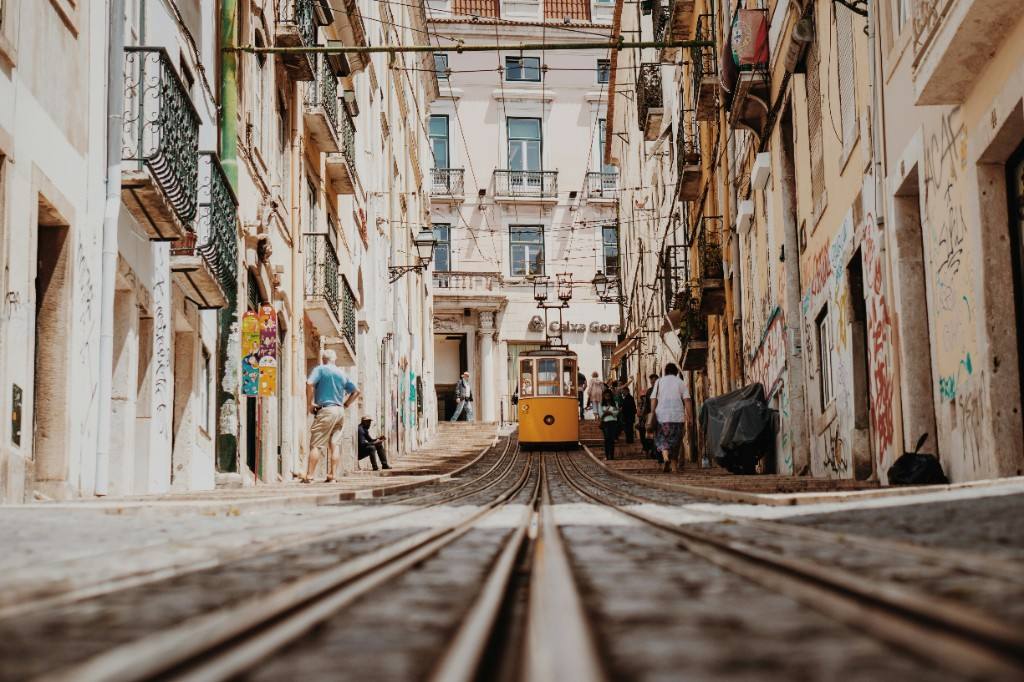
Lisbon does not preserve 1755 in one monument. The event is easier to understand as a contrast. Walk through the regular streets of Baixa, climb toward the older fabric of Alfama, then stand beneath the roofless Gothic arches of Carmo. Three places in the same city tell three different versions of what was destroyed, what survived and what had to be invented again.
A morning when more than the ground moved
The earthquake struck on the morning of 1 November 1755, All Saints’ Day. Contemporary accounts describe a sequence of violent shocks. Fires then spread through the city, and a tsunami reached the riverfront. The disaster was not one event but several, arriving one after another.
The lower city suffered especially heavily. Churches, homes, commercial buildings and royal spaces were lost or badly damaged. Exact casualty estimates vary across sources, which is one reason numbers are less useful here than the physical consequence: a large part of central Lisbon could no longer function as it had before.
Rebuilding meant drawing a new city
The response became closely associated with Sebastião José de Carvalho e Melo, the future Marquês de Pombal, but reconstruction was not the work of one person. Manuel da Maia, Eugénio dos Santos and Carlos Mardel were among the figures involved in planning the new centre. The plan approved under Pombal replaced much of the destroyed lower city with a clearer network of streets crossing at right angles.
Street width, building rhythm and circulation were treated as parts of a system. This is why Baixa feels different from the older neighbourhoods above it. The regularity is not simply an aesthetic preference; it belongs to a moment when Lisbon had to decide how a capital should work after catastrophe.
The trace of 1755 is not only in what disappeared, but in the order that appeared afterwards.
Why Baixa feels different
Rua Augusta is one of the easiest places to see the logic of the reconstruction. It belongs to the post-earthquake reorganisation of Baixa, where streets were given clearer hierarchies and façades followed a more measured rhythm. The effect becomes obvious when you move through the district on foot: long sightlines, repeated elevations and comparatively predictable blocks.
The rebuilding also included an early concern with seismic resistance. Lisbon’s own historical material describes buildings in the Pombaline centre as being conceived with earthquake resistance in mind. That detail changes the way the architecture can be read. The regular façade is not only a style; behind it sits a memory of structural failure.
The same disaster left different traces
Carmo Monastery tells the story through absence. Founded in the late fourteenth century, it was heavily damaged in 1755. Its open Gothic arches now make the missing roof part of the experience. Whether or not every later story about why it remained unrestored can be proved, the ruin has become one of Lisbon’s clearest physical reminders of the disaster.
Lisbon Cathedral gives another version: it was damaged but survived. Alfama offers another again. The old neighbourhood is described as having escaped much of the destruction, and its irregular lanes preserve a street logic very different from Baixa below.
This is why the earthquake becomes easier to understand while walking. Lisbon does not offer a single “before” and “after”; it offers surviving fragments, repaired buildings, ruins and a newly planned centre within a relatively small area.
A story Lisbon still walks through
More than two and a half centuries later, 1755 remains unusually visible because it changed ordinary movement. The story is present in the route between neighbourhoods, in the difference between a grid and a maze, in the distance between a complete church and a roofless one.
That makes the earthquake more than a dramatic episode from the past. It became part of the city’s urban grammar. Lisbon was rebuilt, but the rebuilding did not erase the disaster; it gave the disaster another form.
Related
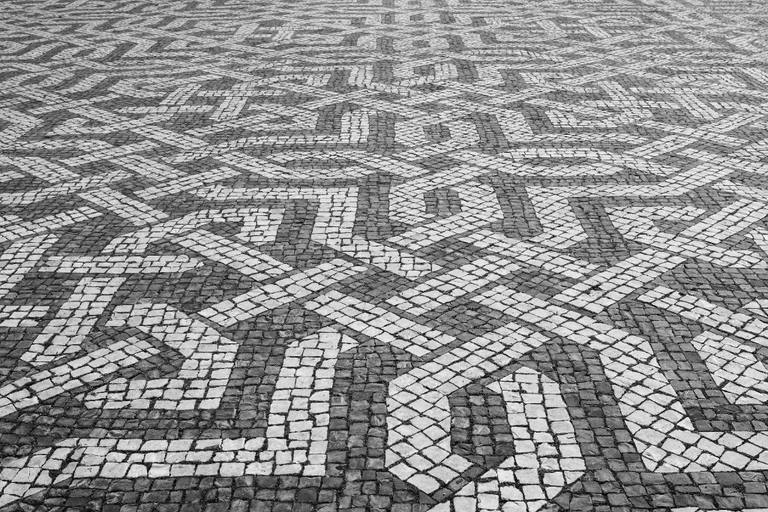
Why are Lisbon’s pavements black and white?
Calçada Portuguesa turns paving into a craft. Small pieces of stone, laid by hand, create patterns that have become part of the visual language of Lisbon and other Portuguese cities.
Read →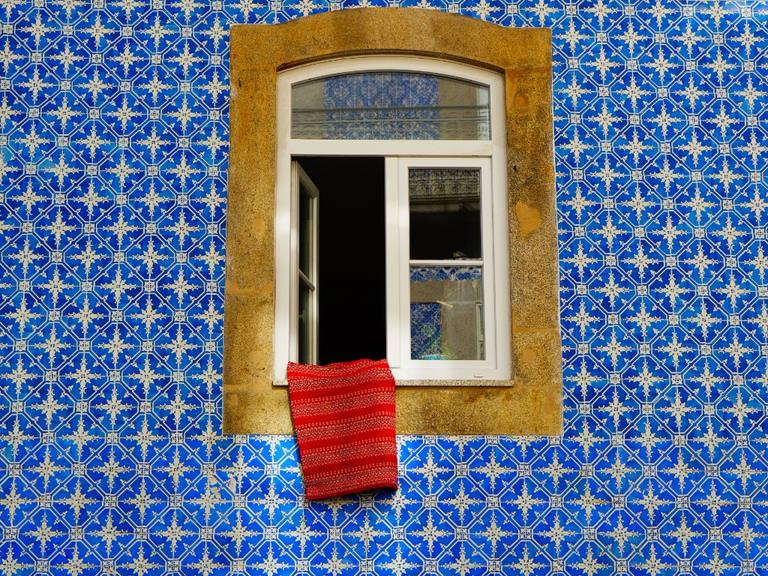
Why is Lisbon covered in tiles?
Azulejo is more than decoration. Over centuries, glazed tiles became part of Portugal’s architectural language — sometimes geometric, sometimes narrative, and still very much present in Lisbon’s everyday streets.
Read →
One peninsula, two different stories
Portugal and Spain share geography, long stretches of history and many cultural layers. What they do not share is one national story. Their differences make more sense when we look at how each political centre formed, expanded and remembered itself.
Read →