

Portugal
Lisbon
A capital shaped by the Tagus, redrawn after 1755 and still read through the contrast between old hills, ordered streets and everyday surfaces.
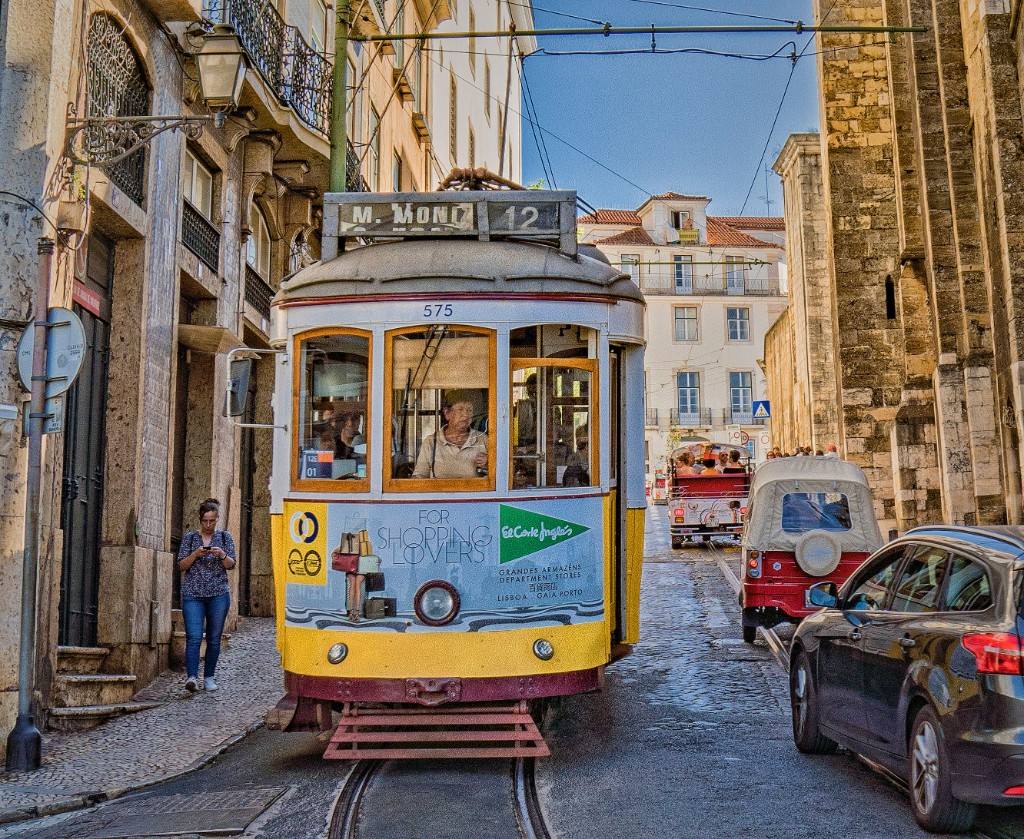
Lisbon is easiest to understand through contrasts. The Tagus opens the city outward; the hills pull it upward. Alfama keeps an older street logic, while Baixa below was reorganised after the earthquake of 1755. Between them, tiled façades, black-and-white pavements and small changes in level turn history into something encountered while walking.
First, the river
The Tagus is more than Lisbon’s backdrop. It helped make the city a port, a commercial centre and, during the fifteenth and sixteenth centuries, a major point of departure for Atlantic voyages. Belém still makes that relationship visible: the Jerónimos Monastery, Belém Tower and the later Monument to the Discoveries all face a landscape organised around leaving and returning. Looking from the city toward the water explains why Lisbon so often feels oriented outward.
Two street patterns, one city
The earthquake of 1755 changed central Lisbon so deeply that the difference can still be felt underfoot. Baixa was rebuilt with a clearer grid, measured façades and more regular blocks. Alfama, which escaped much of the destruction, preserves a far less predictable pattern of narrow lanes, slopes and turns. Walking from one into the other makes the earthquake visible without needing a memorial: the city plan itself becomes evidence.
The city is written on its surfaces
Lisbon’s history is not confined to monumental buildings. Azulejos cover façades, entrances and public interiors; calçada turns the pavement itself into a hand-built pattern. These surfaces are easy to dismiss as decoration because they are everywhere. Yet that everyday quality is precisely what makes them useful: they show how craft, architecture and public life overlap. In Lisbon, the wall and the ground often carry as much character as the monument at the end of the street.
The hills change how the city is read
Lisbon spreads across a steep landscape, and that topography constantly changes scale. A street that feels enclosed can open suddenly toward the river; a neighbourhood that seems close on a map may sit several levels above another. The climbs, viewpoints and stairways are not incidental difficulties added to the city — they help explain its form. From above, Baixa reads as order; from within the older quarters, the city is experienced as fragments, corners and short views.
A city that still uses its memory
Lisbon’s older cultural layers have not all been moved into museums. Fado remains associated with neighbourhoods such as Alfama; azulejos continue into modern stations and streets; calçada survives through constant repair. That does not mean the city is unchanged. It means older forms continue to be reused inside a contemporary capital. The interesting part is often not whether something is ‘traditional’, but how it still fits into ordinary life.
A small perspective
A reading, not a historical claim.
To read Lisbon a little more closely, compare transitions rather than monuments: the grid of Baixa with the turns of Alfama, the flat riverfront with the climbs above it, a tiled façade with the pavement below. The city often explains itself in the space between its famous sights.
A little closer
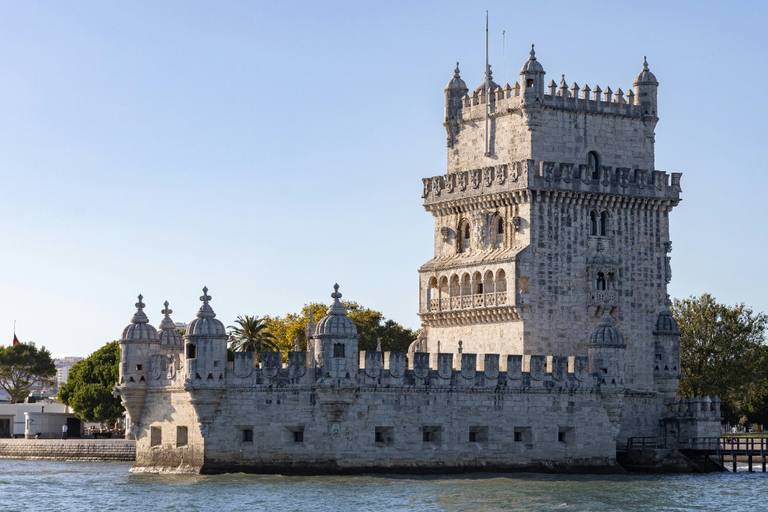
Belém Tower
Built on the Tagus during the reign of Manuel I, Belém Tower brings defence, royal symbolism and the maritime imagination of early-sixteenth-century Portugal into one compact monument.
Read →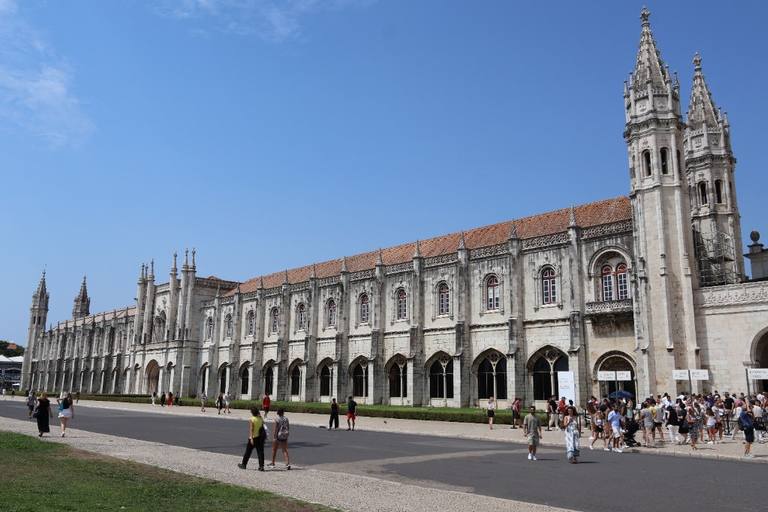
Jerónimos Monastery
At Jerónimos, religion, royal ambition and Portugal’s maritime expansion meet in the same stone. Its scale matters, but the story becomes clearer in the carved details.
Read →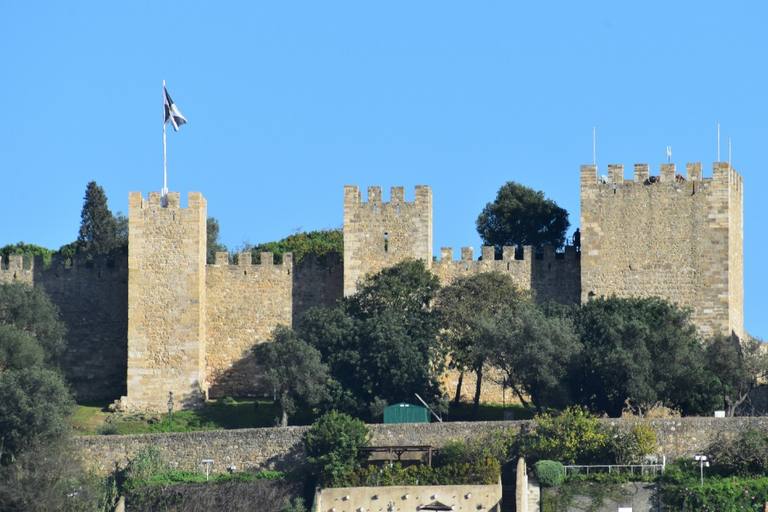
São Jorge Castle
Above Alfama, São Jorge Castle makes Lisbon’s geography and changing political history visible at the same time: a fortified hill whose meaning shifted as the city changed rulers.
Read →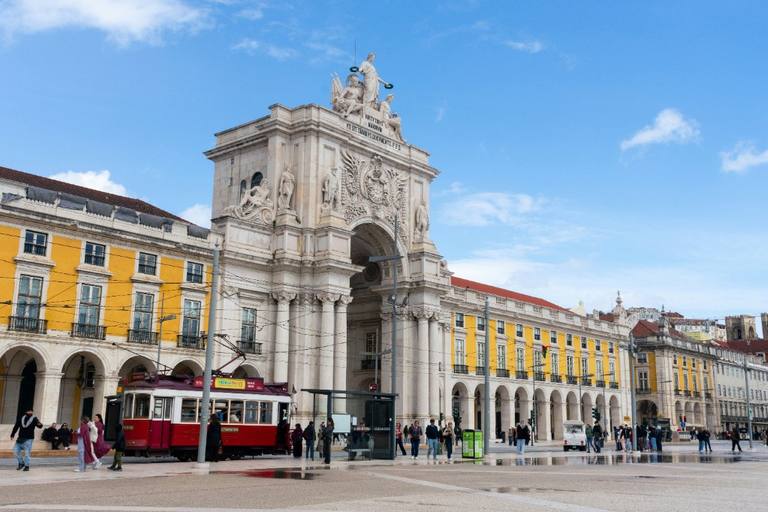
Praça do Comércio
Lisbon’s great river square is one of the clearest places to see how the city changed after 1755: a former royal site rebuilt as an ordered civic and commercial space facing the Tagus.
Read →
Stories from Lisbon
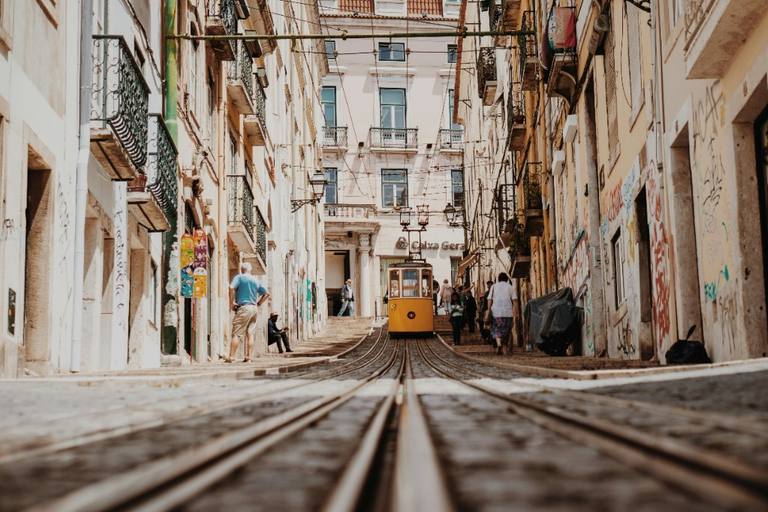
Why did Lisbon become a different city after 1755?
The earthquake, fires and tsunami of 1 November 1755 devastated Lisbon. The reconstruction that followed did something equally lasting: it changed the way the lower city was planned, built and walked.
Read →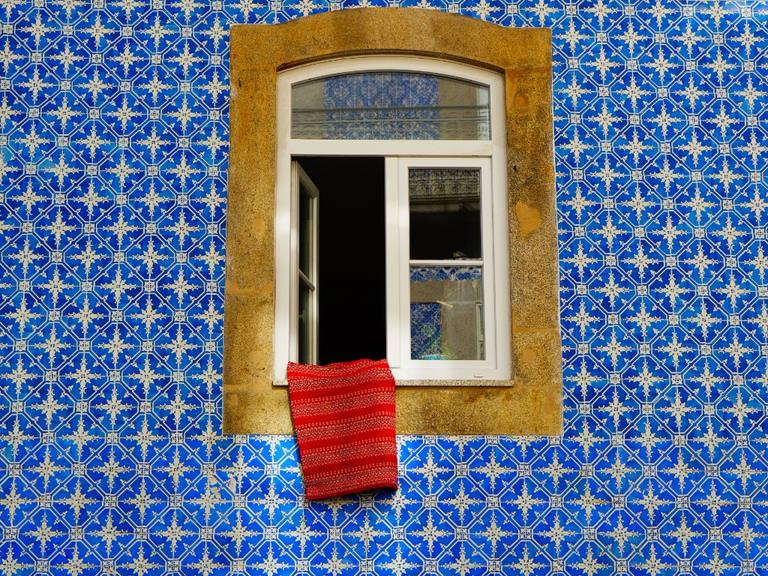
Why is Lisbon covered in tiles?
Azulejo is more than decoration. Over centuries, glazed tiles became part of Portugal’s architectural language — sometimes geometric, sometimes narrative, and still very much present in Lisbon’s everyday streets.
Read →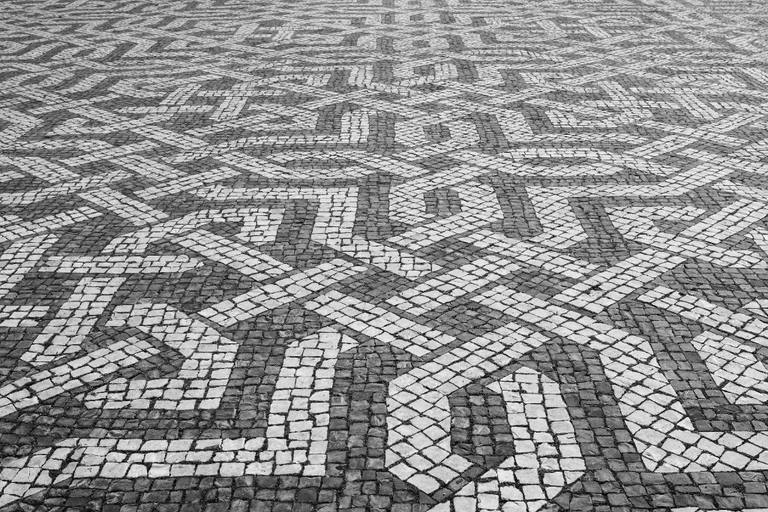
Why are Lisbon’s pavements black and white?
Calçada Portuguesa turns paving into a craft. Small pieces of stone, laid by hand, create patterns that have become part of the visual language of Lisbon and other Portuguese cities.
Read →Why is Belém Lisbon’s memory of the sea?
At Belém, Lisbon’s maritime expansion became architecture. The monastery, tower and later monuments tell not only how Portugal went to sea, but how those voyages were remembered — and what that memory leaves out.
Read →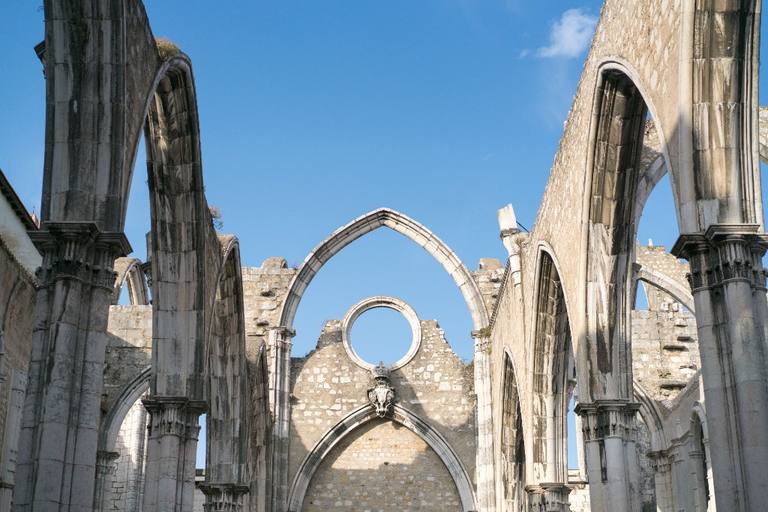
Why is Carmo still roofless?
Carmo’s open Gothic arches look like a deliberate memorial to the earthquake of 1755. The real story is more interesting: reconstruction began, stopped in 1834 and was later abandoned in an age that had learned to value ruins themselves.
Read →
Is saudade enough to understand fado?
Fado and saudade are often placed side by side, as if one word could explain an entire musical tradition. Saudade helps — but Lisbon’s fado is also a performance, an urban history and a way of turning ordinary experience into song.
Read →