

Culture
Why are Lisbon’s pavements black and white?
Calçada Portuguesa turns paving into a craft. Small pieces of stone, laid by hand, create patterns that have become part of the visual language of Lisbon and other Portuguese cities.
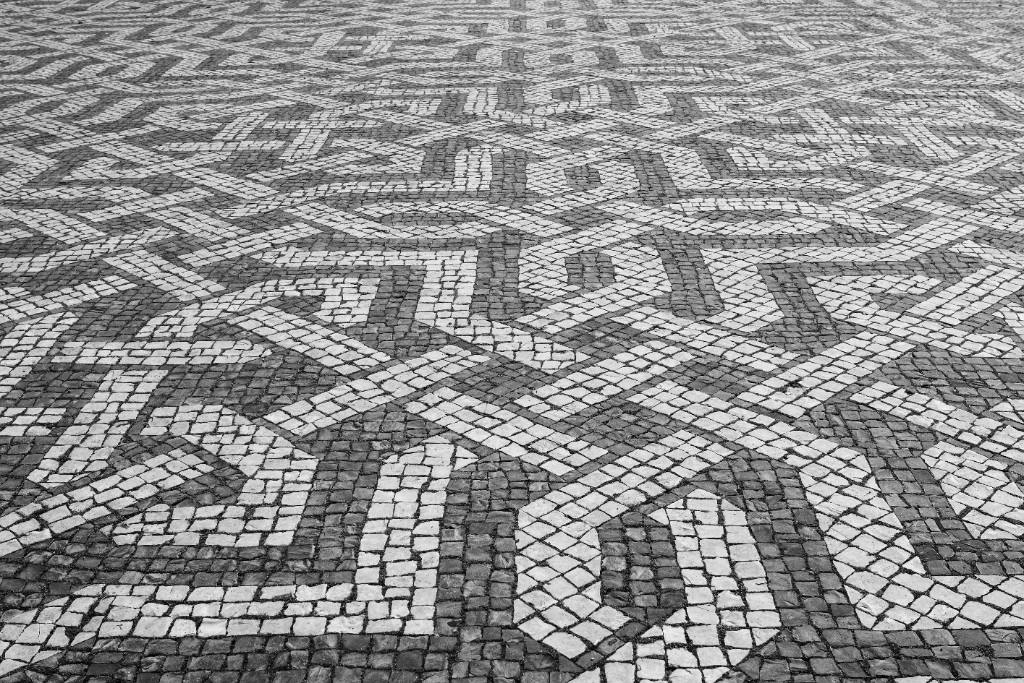
Lisbon asks you to look up — toward balconies, façades and hills — but some of its most characteristic design is underfoot. Calçada Portuguesa is easy to treat as background because it does exactly what a pavement should do: it carries everyday movement. Yet it is also a hand-built surface, assembled piece by piece by specialised craftspeople.
A drawing made from stone
Portuguese paving is traditionally made from small worked stones laid by hand by calceteiros. Lisbon’s tourism authority describes limestone as the basic material; IBERYUS research notes also record the use of contrasting dark stone in black-and-white compositions.
The technique sits somewhere between construction and drawing. Each piece has to work structurally as pavement, yet the finished surface may form waves, geometric patterns, stars, ships or other figurative motifs. The design only becomes complete when hundreds or thousands of small pieces begin to read as one image.
When decoration becomes the route
One of calçada’s quiet qualities is that the decorative object is not separated from daily life. There is no frame and no instruction to stop. The pattern sits directly inside the route to work, the walk to a café or the crossing of a square.
That changes the relationship between the city and its decoration. A façade belongs to the building in front of us; calçada belongs to movement. It appears and disappears under crowds, café tables, shadows and rain. Much of the time we only notice it when the street briefly clears.
Some of Lisbon’s decoration is not placed in front of us. It is built into the ground we cross every day.
Rossio: the pattern becomes visible
Rossio is one of the city’s best-known places to notice the tradition because the pavement is not a small detail at the edge of the square. The repeated black-and-white movement becomes part of the space itself. Similar encounters continue through central Lisbon, including Restauradores and Avenida da Liberdade.
The effect changes with distance. Standing still, you see individual stones and the irregularity of handwork. From further away, the joins disappear and the pavement behaves like a continuous graphic surface. The same place can therefore feel crafted and monumental at once.
A beautiful surface with a practical cost
Calçada is not a frictionless piece of urban design. Smooth stone can become slippery when wet, and maintaining a hand-laid surface requires people who still know the craft. The IBERYUS source material points to municipal efforts in Lisbon to keep calceteiro skills alive.
That tension is worth noticing. What visitors often read as timeless tradition depends on continuous repair, training and physical labour. A historic-looking street is not simply inherited; it has to be remade piece by piece.
A small way to read the street
The next time the pavement changes beneath you, it may be worth slowing down for a few seconds. Not because every pattern hides a grand story, but because the ground can reveal how much deliberate design is embedded in ordinary movement.
- Look at the pattern from a distance before looking at individual stones.
- Notice where the design changes at kerbs, trees, entrances or street furniture.
- After rain, treat the polished surface carefully — especially on Lisbon’s slopes.
- Look for places where repair has subtly changed the original rhythm.
Related
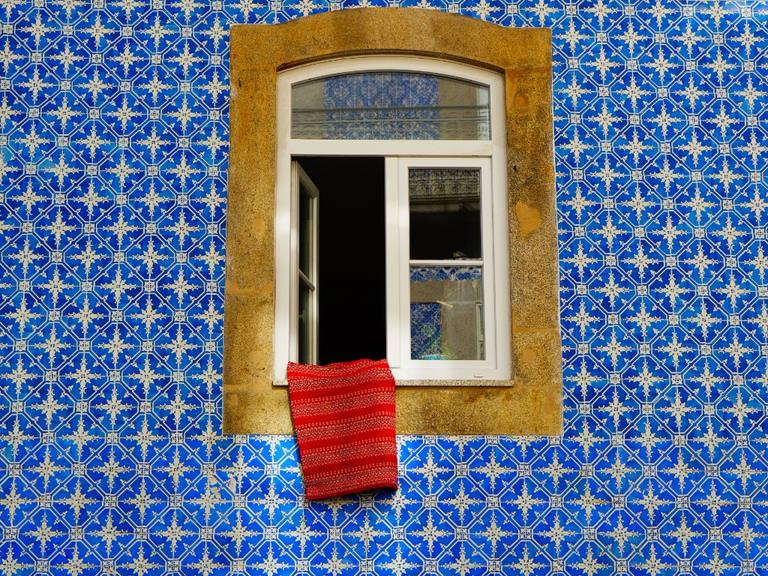
Why is Lisbon covered in tiles?
Azulejo is more than decoration. Over centuries, glazed tiles became part of Portugal’s architectural language — sometimes geometric, sometimes narrative, and still very much present in Lisbon’s everyday streets.
Read →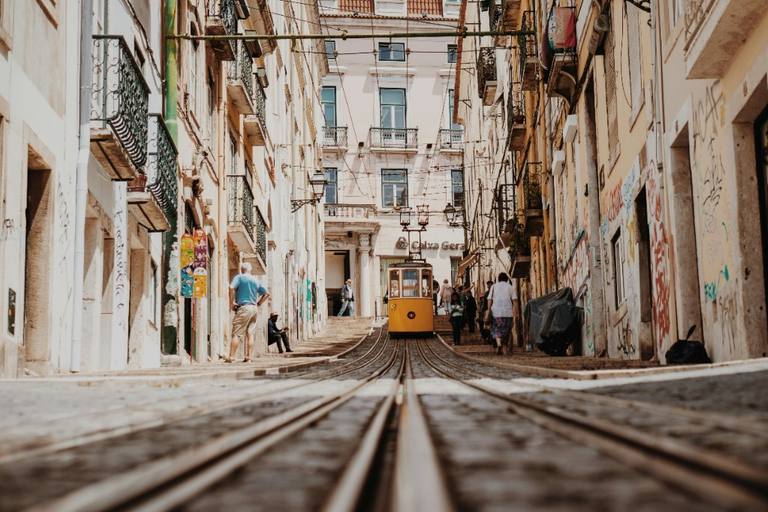
Why did Lisbon become a different city after 1755?
The earthquake, fires and tsunami of 1 November 1755 devastated Lisbon. The reconstruction that followed did something equally lasting: it changed the way the lower city was planned, built and walked.
Read →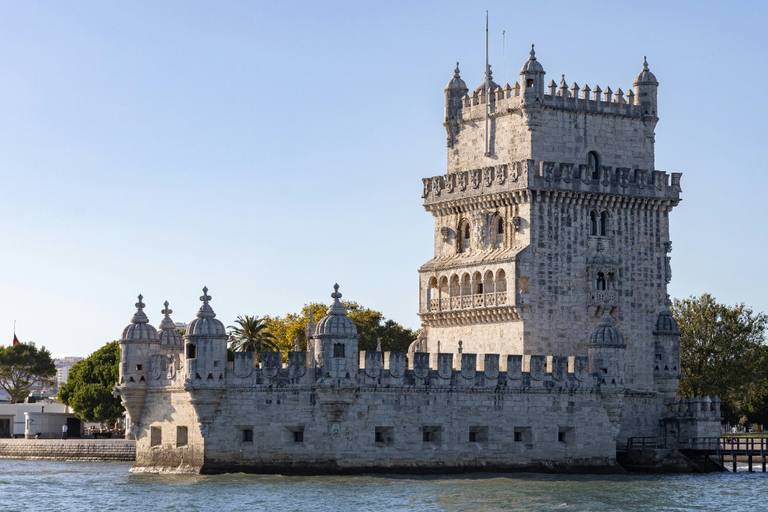
Why is Belém Lisbon’s memory of the sea?
At Belém, Lisbon’s maritime expansion became architecture. The monastery, tower and later monuments tell not only how Portugal went to sea, but how those voyages were remembered — and what that memory leaves out.
Read →