

Culture
Why is Lisbon covered in tiles?
Azulejo is more than decoration. Over centuries, glazed tiles became part of Portugal’s architectural language — sometimes geometric, sometimes narrative, and still very much present in Lisbon’s everyday streets.
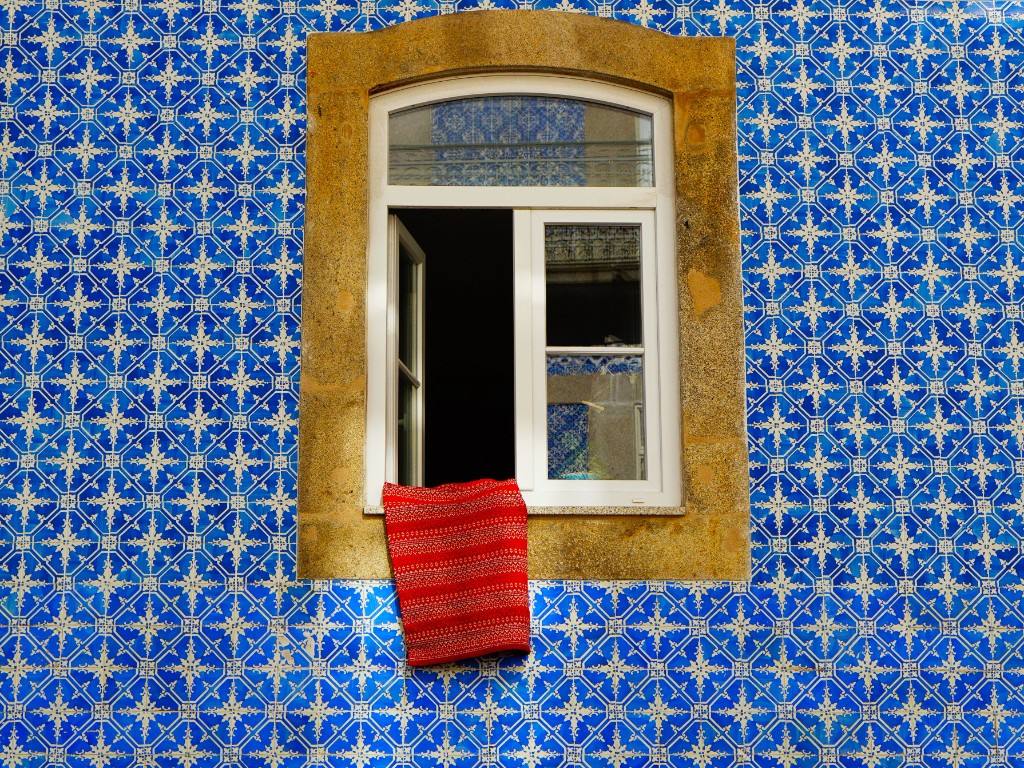
At first, Lisbon’s tiles are easy to read as colour: blue against white, repeated patterns around a window, a façade catching the afternoon light. Stay with them a little longer and they begin to tell a larger story. Azulejos belong to palaces and churches, but also to apartment buildings, stations and ordinary streets. That is what makes them interesting here: the city does not keep the tradition at a distance.
A surface that became part of the street
Azulejo is the Portuguese name used for glazed ceramic tiles, but Lisbon’s relationship with them is not limited to individual decorative objects. Repeated across a façade, a small tile becomes part of architecture: it can frame openings, organise a wall, soften a large surface or turn an otherwise ordinary building into something immediately recognisable.
That repetition matters. From a distance we often see one pattern rather than hundreds of separate pieces. Up close, the same surface breaks into small variations — edges, repairs, changes of tone, tiny differences in the way tiles meet a corner or window. The city can be read at both scales.
A language shaped across Iberia
Portugal did not develop the idea of covering architecture with ceramic surfaces in isolation. Iberia had already absorbed powerful traditions of geometric decoration during centuries of Islamic rule. Portuguese azulejo developed later within that broader visual world, then acquired its own techniques, colours and uses.
The collection of Lisbon’s National Tile Museum begins with production from the second half of the fifteenth century and continues into the present. That long timeline is useful because it prevents one common misunderstanding: there is no single, timeless “Portuguese tile style”. Patterns, colours and subjects changed as tastes, technologies and patrons changed.
Sometimes a city does not place its past in a museum; it keeps using it on its walls.
Why blue and white feels so familiar
For many visitors, the image of Portuguese azulejo is almost automatically blue and white. That association has a real historical basis: blue-and-white work became especially prominent in the Baroque and Rococo periods, and Lisbon preserves many examples from the eighteenth century.
But colour is only part of the change. Tiles also became narrative surfaces. Instead of repeating a single geometric or floral unit, large panels could depict religious episodes, landscapes or ceremonial scenes. In those interiors, the wall begins to work almost like a painting assembled from ceramic pieces.
Looking for that difference — pattern versus scene — is one simple way to make azulejos easier to read. One repeats a rhythm across architecture; the other asks you to stop and follow a story.
The tradition did not stay in museums
The National Tile Museum gives the tradition a chronological home, but the stronger impression often comes after leaving it. Azulejos continue to appear in modern public architecture, including metro stations and street signage. Old material does not necessarily mean old use.
Porto offers another scale of the same idea. At São Bento Station, vast tile panels turn a transport building into a narrative interior. In Lisbon, the encounter is often quieter: a repeating façade, a stairwell, a shopfront, a small panel that has simply remained part of daily movement.
Seen together, these examples make the tradition feel less like a catalogue of beautiful surfaces and more like a flexible medium that kept finding new places to live.
What might be worth noticing?
The most interesting tiled façade is not necessarily the oldest or the most elaborate. Sometimes the useful question is simply how the surface works with the building around it.
- Does the design repeat as a pattern, or does it form a scene?
- How does the pattern meet windows, doors and corners?
- Can you see repairs, missing tiles or changes in tone?
- Does the tile cover an ordinary building or a ceremonial one — and does that change how you read it?
Related
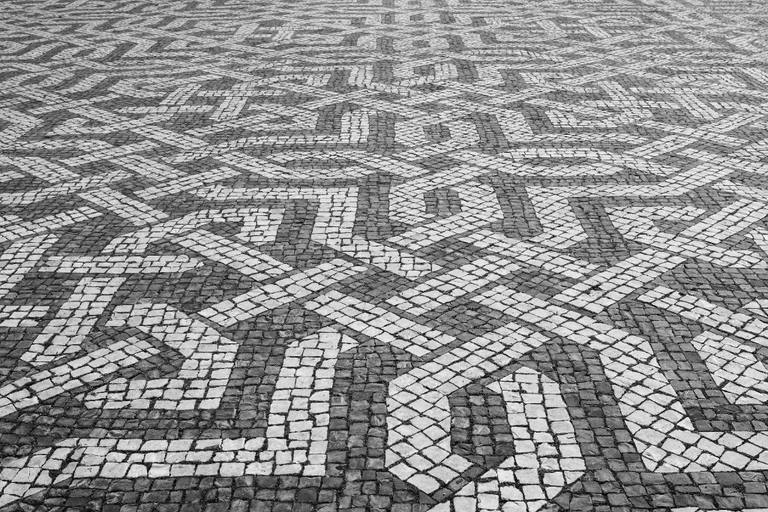
Why are Lisbon’s pavements black and white?
Calçada Portuguesa turns paving into a craft. Small pieces of stone, laid by hand, create patterns that have become part of the visual language of Lisbon and other Portuguese cities.
Read →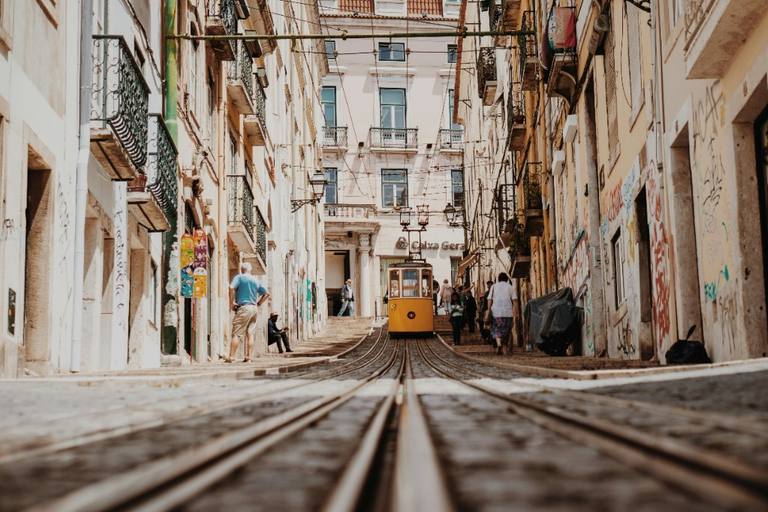
Why did Lisbon become a different city after 1755?
The earthquake, fires and tsunami of 1 November 1755 devastated Lisbon. The reconstruction that followed did something equally lasting: it changed the way the lower city was planned, built and walked.
Read →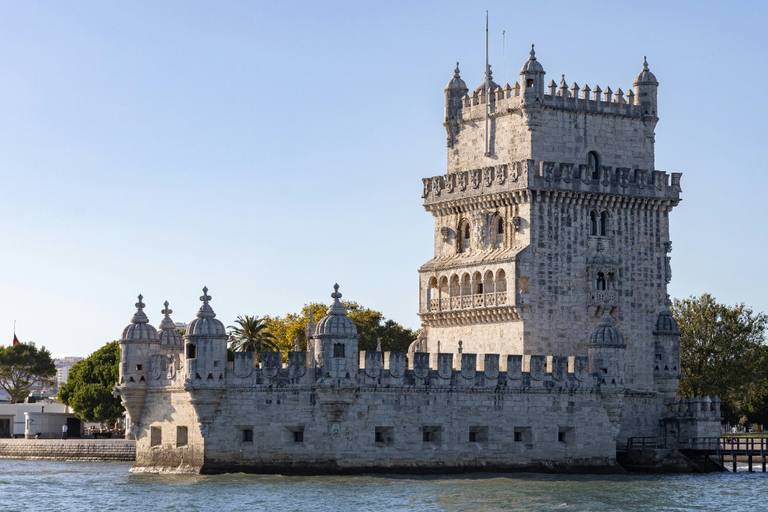
Why is Belém Lisbon’s memory of the sea?
At Belém, Lisbon’s maritime expansion became architecture. The monastery, tower and later monuments tell not only how Portugal went to sea, but how those voyages were remembered — and what that memory leaves out.
Read →