

History
Why is Carmo still roofless?
Carmo’s open Gothic arches look like a deliberate memorial to the earthquake of 1755. The real story is more interesting: reconstruction began, stopped in 1834 and was later abandoned in an age that had learned to value ruins themselves.
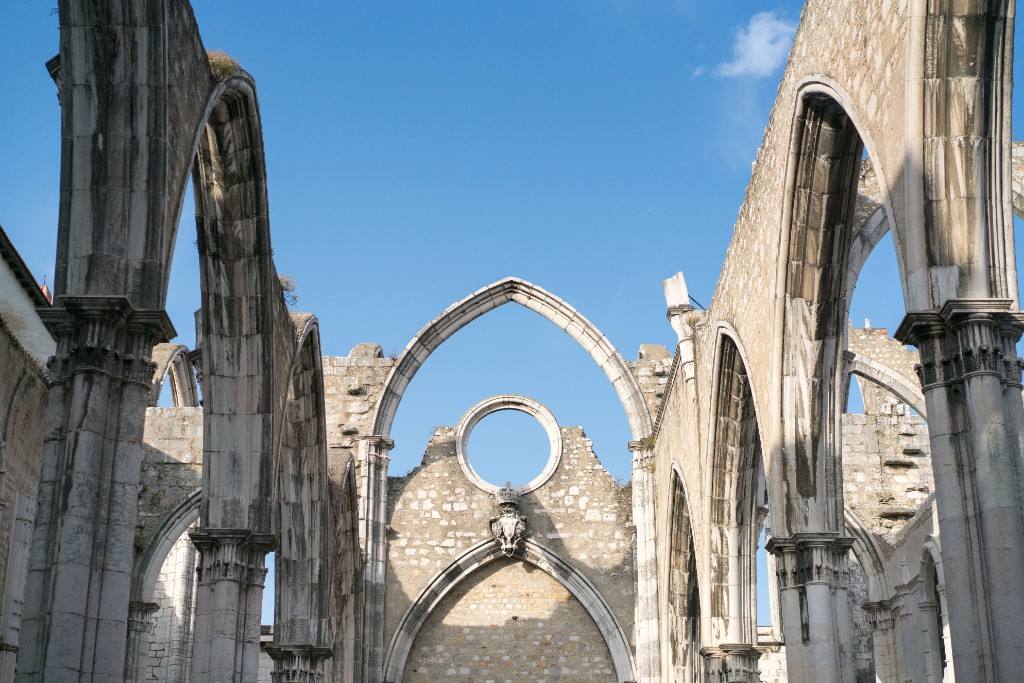
Carmo is one of Lisbon’s most persuasive historical images because the missing roof seems to explain itself. A Gothic church was damaged in the great earthquake, the sky is still visible through the nave, therefore the ruin must have been intentionally left untouched as a warning to future generations. It is a good story — and too simple. The church was in fact reconstructed for decades. What survives today is the result of disaster, unfinished repair, political change and nineteenth-century taste.
Before the ruin, Carmo was a major Gothic church
The Church and Convent of Santa Maria do Carmo were founded in 1389 by Nuno Álvares Pereira, one of the most important military figures of medieval Portugal. The church stood on the hill opposite São Jorge Castle and became one of Lisbon’s major Gothic religious buildings.
Its scale matters because today the ruin can make the building feel incomplete by definition, as if it had always been an atmospheric fragment. Before 1755 it was a functioning and richly developed religious complex that had accumulated additions and decoration over centuries.
Understanding what was there first makes the absence above the nave more powerful. The open sky is not the design; it is what remains after a design was broken.
1755 damaged more than the roof
The earthquake of 1 November 1755 severely damaged Carmo, and the fires that followed destroyed much of its religious and artistic contents. In a city where whole districts had to be reorganised, the church became one of many damaged structures facing an uncertain future.
Its position makes the contrast especially striking today. From Carmo, the rebuilt geometry of Baixa lies nearby below. One part of Lisbon answered the disaster with a new urban order; Carmo preserves the disruption in a much more literal form.
That contrast is why the ruin works so strongly as a memory of the earthquake even though becoming a memorial was not the entire original plan.
The church was not simply abandoned after the earthquake
The Carmo Archaeological Museum states clearly that reconstruction began in 1756. Work continued in a Neo-Gothic direction, and some of the pillars and arches visible today belong to that post-earthquake phase rather than to the original medieval church.
This detail changes the story. The roofless nave is not a perfectly preserved snapshot of the morning after the earthquake. It is a layered ruin containing medieval fabric, earthquake damage and later reconstruction work.
The process stopped definitively in 1834, when the religious orders were abolished in Portugal. An institutional and political change, not only structural difficulty, therefore helped determine the building’s unfinished state.
Carmo is not a ruin frozen in 1755. It is a ruin that continued to have a history.
Romanticism changed the value of the ruin
By the middle of the nineteenth century, the cultural meaning of ruins had changed. The museum explains that, under the Romantic taste for medieval monuments and picturesque ruins, the decision was made not to continue rebuilding the church. The open nave itself had acquired aesthetic and historical value.
This is the part often lost in the popular version. Carmo was not simply left broken because Lisbon wanted an immediate earthquake memorial. Rather, an unfinished reconstruction later became worth preserving as a ruin.
The distinction is subtle but important. Memory was not created in a single decision in 1755. It accumulated.
A museum inside the interruption
The Archaeological Museum of Carmo was founded in 1864, placing collections inside the surviving complex. That created another layer: the ruin stopped being only the remains of a church and became a place where other fragments of the past were gathered and interpreted.
Today the experience is unusual because the building and the collection operate differently. Objects sit inside a museum; the nave around them is itself an exhibit of time, damage and unfinished repair.
When you look upward, the most important object is the thing that is no longer there.
Related
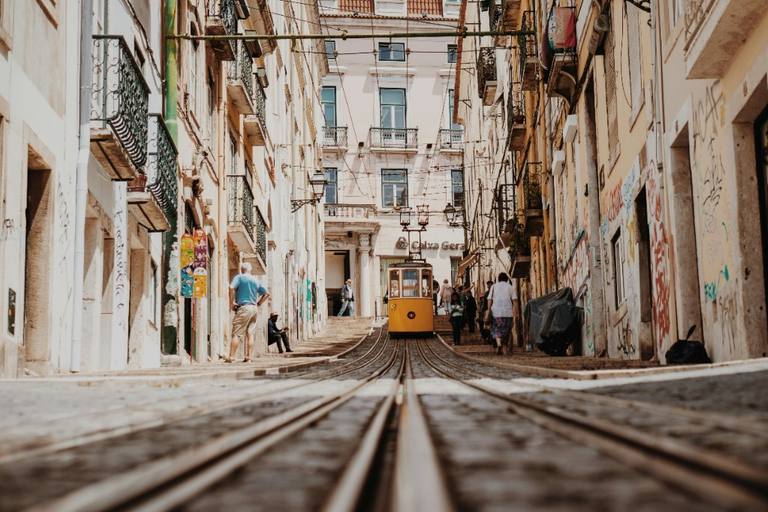
Why did Lisbon become a different city after 1755?
The earthquake, fires and tsunami of 1 November 1755 devastated Lisbon. The reconstruction that followed did something equally lasting: it changed the way the lower city was planned, built and walked.
Read →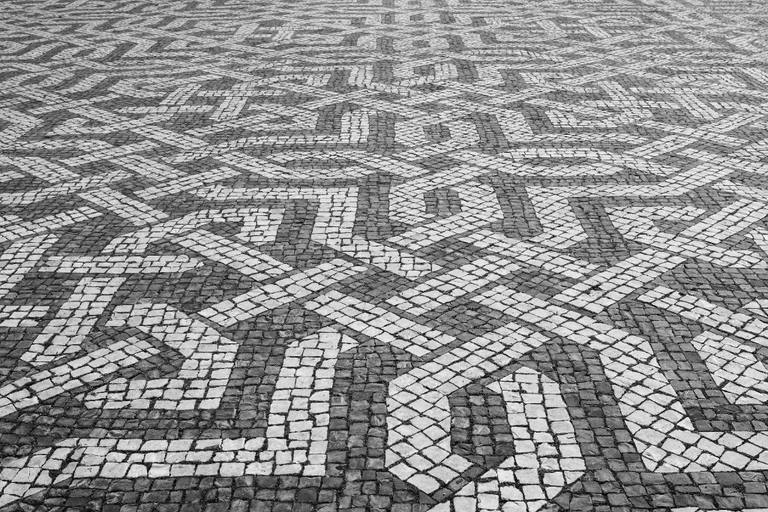
Why are Lisbon’s pavements black and white?
Calçada Portuguesa turns paving into a craft. Small pieces of stone, laid by hand, create patterns that have become part of the visual language of Lisbon and other Portuguese cities.
Read →
One peninsula, two different stories
Portugal and Spain share geography, long stretches of history and many cultural layers. What they do not share is one national story. Their differences make more sense when we look at how each political centre formed, expanded and remembered itself.
Read →